
Fats, Oils & Greases

Written by:

Posted on:

Categories:

Share:

Facebook
Twitter
LinkedIn
Email

Get The Latest:

Join our print or digital newsletter to be informed about the agency’s many projects and other news.

River Authority Utilities staff actively monitor pipes to detect potential clogs and other issues that need to be addressed.

Did you know the San Antonio River Authority (River Authority) is a full-service wastewater utility provider within a portion of northeast and southeast Bexar County? It’s true. We’ve been in the wastewater treatment business in Bexar County since 1966, and over the years, we have grown to help provide utilities assistance to communities throughout Wilson, Karnes, and Goliad counties as well. As part of our commitment to safe, clean, enjoyable creeks and rivers, our Utilities staff also takes part in education outreach to better inform our constituents of the services we provide and the challenges of operating and maintaining wastewater collection systems and wastewater treatment plants.

One of the challenges our team faces are clogged pipes due to the improper disposal of fats, oils, and greases (FOG). Learn more about the damage FOG can cause and what steps you can take to help prevent future clogs.

What’s the damage that FOG can cause on pipes?

FOG can accumulate in pipes just as cholesterol accumulates in human arteries. Overtime, this accumulation decreases the flow capacity in these areas, just like a clogged artery, which can lead to a clogged pipe and a backup in the wastewater collection system. These backups can cause a sanitary sewer overflow (SSO) when the wastewater flows out of the system via manholes, cleanouts, and sometimes even into residences and businesses. Water quality in area creeks and rivers can be negatively impacted by SSOs. FOG that doesn’t accumulate in the wastewater collection system can travel all the way to the wastewater treatment plant. When this happens, FOG impacts the ability of the microorganisms in the treatment process to properly treat the wastewater.

How does the River Authority address this issue?

River Authority Utilities staff regularly performs preventative maintenance by cleaning the lines.

The River Authority utilizes the latest technology to produce a high-quality effluent and to preserve the ecosystems into which the treated effluent is returned. Our operations and maintenance procedures include preventative maintenance on the wasterwater collection system to minimize the impacts of FOG. The best prevention, however, starts with individuals not putting fats, oils, and grease down the drain.

Examples of FOG include:

  • Animal Fats
  • Butter
  • Dairy Products
  • Desserts
  • Dressings
  • Food Scraps
  • Lard
  • Margarine
  • Oils
  • Sauces
  • Shortening
  • Soups

What can I do to prevent clogs?

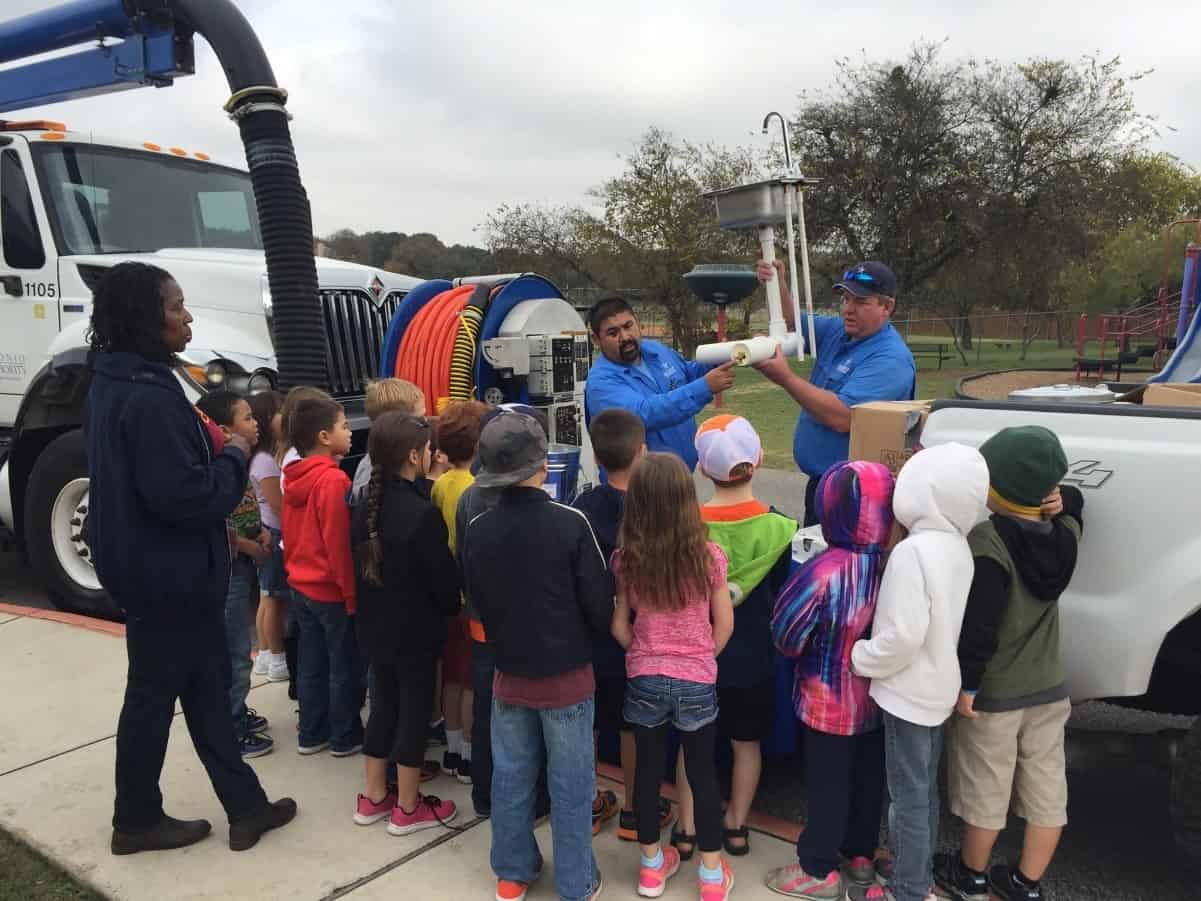
Staff from the River Authority Utilities Department demonstrate to students from Watts Elementary how pouring and washing fats, oils, and grease down the drain can cause grease build-up in pipes leading to major damage.

Staff from the River Authority Utilities Department demonstrate to students from Watts Elementary how pouring and washing fats, oils, and grease down the drain can cause grease build-up in pipes leading to major damage.

Properly dispose of fats, oils, and grease to protect your pipes, the wastewater infrastructure, and keep area creeks and rivers free of contaminants. Be River Proud and help keep sewers FOG free by following these easy steps:

  1.  Pour oil and grease into a container, freeze it, then trash it.
  2.  Before washing dishes, scrape food particles and batters into the trash.
  3.  Help spread the word! Share this info with your friends and family so they too can take proper action. 
Related Articles

Alerts

Park Closure: Safety Notice

Safety Notice: All lower sections of River Crossing Park, Graytown, and Helton have been closed to due to potential flooding. They will remain closed until further notice.

Stay Weather‑Aware

We are experiencing heavy rains and thunderstorms this week and are currently under a flood watch. Heavy rains in short time spans may result in high water on roads and temporary closures at low water crossings.

Before heading out, residents are encouraged to check SARiverFlood.org or their local county flood website for real‑time roadway conditions:

These sites provide up‑to‑date information from flood‑monitoring sensors across the region. Real‑time updates are available 24/7 to help you stay informed as conditions change.

Please use caution when traveling and plan routes accordingly.

Museum Reach & San Pedro Creek

Due to the forecasted rain event, water features at San Pedro Creek and Museum Reach will be temporarily shut down to prevent failure. Service will resume once the event has passed.

Espada Park

The restrooms at Espada park are closed due to a water leak. We apologize for the inconvenience.

SASPAMCO Paddling Trail Temporarily Closed

Staff have removed two large log jams just downstream of Helton Nature Park, keeping the southern portion of the SASPAMCO Paddling Trail temporarily closed. Staff are working to contact adjacent landowners to support a land-based removal solution.

Goliad Paddling Trail Alert

NOTICE: HWY 59 Landing Site Closed

Due to TxDOT construction on the HWY 59 Bridge, the HWY 59 landing site is closed until further notice. However, the Goliad Paddling Trail remains open, and paddlers can still access the river at the Riverdale, Ferry Street, and Goliad State Park landings.

Please plan accordingly and check back for updates.

River Reach Newsletter and Blog Signup

River Reach is offered as a printed, physical mailing to your residence or business. The Blog is a weekly electronic email with news and updates in order to be more environmentally conscious. Please fill out the form below and indicate your preferred method of delivery.

By submitting this form, you are consenting to receive marketing materials from: San Antonio River Authority, 100 East Guenther St., San Antonio, TX, 78204, US. You can revoke your consent to receive emails at any time by using the SafeUnsubscribe® link, found at the bottom of every email. Emails are serviced by Constant Contact. This site is protected by reCAPTCHA and the Google Privacy Policy and Terms of Service apply.