


We’re introducing a new blog series called “When Rivers Rise Fast” to support our community in preparing for and responding to flash floods.
This series will provide valuable information, including a detailed look at the new flood warning system we’re implementing, and a clear explanation of what flash flooding is and why it’s so dangerous. We’ll also highlight essential tools and resources available to the public, empowering you to plan safer routes and avoid flood risks when you’re on the road. In this fourth post of the series, learn about the tools you can use to stay informed of severe weather, plan safer travel routes, and avoid flood risks.
What to Do During a Storm

- Watch the weather—look for flash flood watches or warnings and sign up for the following alerts to stay informed:
- Sign up for the Regional Emergency Alert Network (REAN)
- Check that Wireless Emergency Alerts (WEAs) are enabled on Your Phone
- Sign up for Energy Storm Alerts (CPS Customers)
- NOAA Weather Radio All Hazards Channel (Find Your Station)
- Use org, TXDOT’s DriveTexas.org, and integrated map apps (ex. WAZE, Google Maps) to check crossings and road closures before driving.
- DO NOT DRIVE through floodwaters– even a small amount can cause a vehicle to lose control, and they can also contain harmful substances.
- Move to higher ground quickly when warned (see #1 to sign up for alerts)
- Teach your family about low‑water crossings and flood risks.
BexarFlood.org: A Lifesaving Alert System
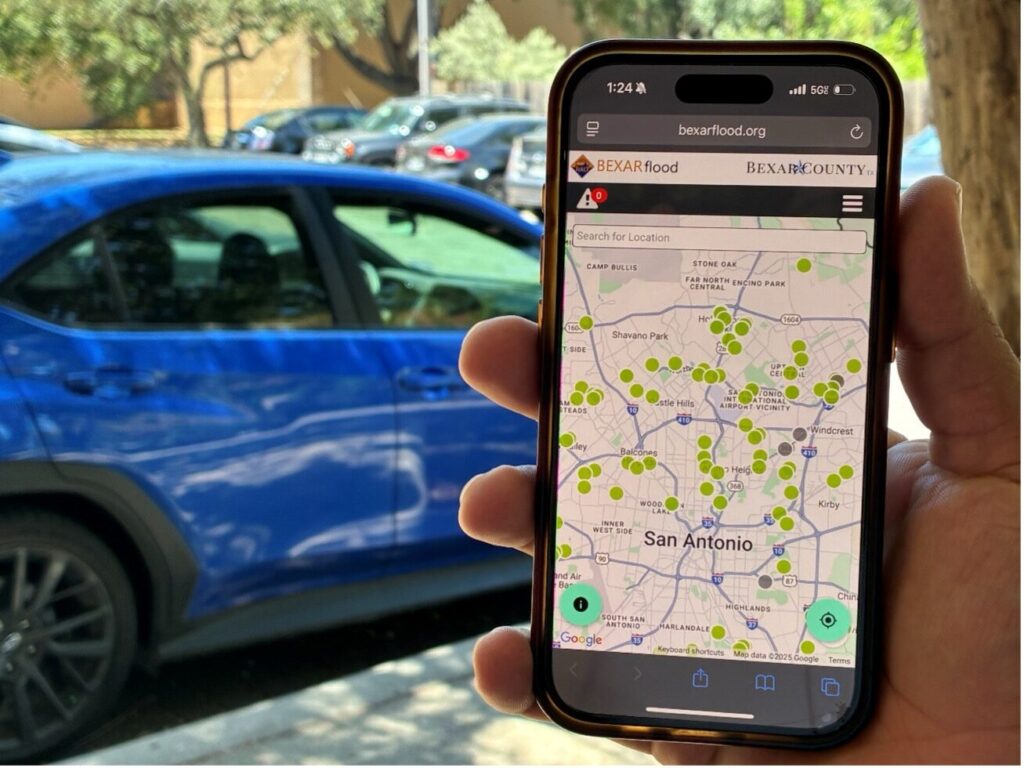
A low‑water crossing is a type of road that is built at a low elevation to pass over a body of water, like a creek or river. When water is low, it’s easy to drive—but in floods, water rapidly covers the road, making it dangerous to cross.
Bexar County, the City of San Antonio, and the River Authority utilize BexarFlood.org, a HALT (High‑Water Alert Lifesaving Technology) to help alert the public of the status of low water crossings.
BexarFlood.org can:
- Measure rising water with sensors at over 190 crossings.
- At certain locations, when water gets high, drivers can see flashing lights and/or gates telling them to stop.
- Show real-time color‑coded maps of low-water crossings: green = safe, yellow = water rising, red = closed
- Works with Waze and Google Maps so you see road hazards while driving. These map apps can be downloaded on mobile devices* from app stores.
*The San Antonio River Authority strongly recommends utilizing hands-free technology while driving to ensure the driver remains alert to the road conditions.
Plan Your High Road Route

In addition to checking BexarFlood.org and using map apps like Waze or Google Maps, identify a “high road” route between your most frequent destinations—such as home, work, and school. This route should avoid low-water crossings and flood-prone roads as much as possible. Practice it in clear weather so you know exactly where to go during heavy rain.
The Big Picture: Regional Collaboration, Real Impact
Floods aren’t going away, but with the launch of the NextGen Flood Warning System, we’re building a more resilient region and investing in systems that provide faster warnings, better data, and more protection for our residents.
Flooding doesn’t recognize city limits or county lines, so our response can’t either. Regional collaboration is essential because water flows across political boundaries, and protecting lives requires a united effort. It’s not just about infrastructure; it’s about people. Every sensor, every map, every alert helps turn uncertainty into action—and action into lives saved.