
Last Updated on July 30, 2026
Howdy, everybody!

My name’s Rex, and I’m one of the Basin Besties! My job is to keep the San Antonio River Basin nice and clean. Now, I’ll admit, I’ve got a bit of a reputation as a lovable mess; I can’t resist a good pile of trash! But that’s actually what makes me so good at my job. I love picking up litter, collecting it, and turning it into something new (just check out my upcycled styrofoam-cup hat and drinking-straw bowtie!). The more I scavenge around the river and the land nearby, the more I see how litter on land can end up in our water, so I’ve made it my mission to remind everyone where trash really belongs.
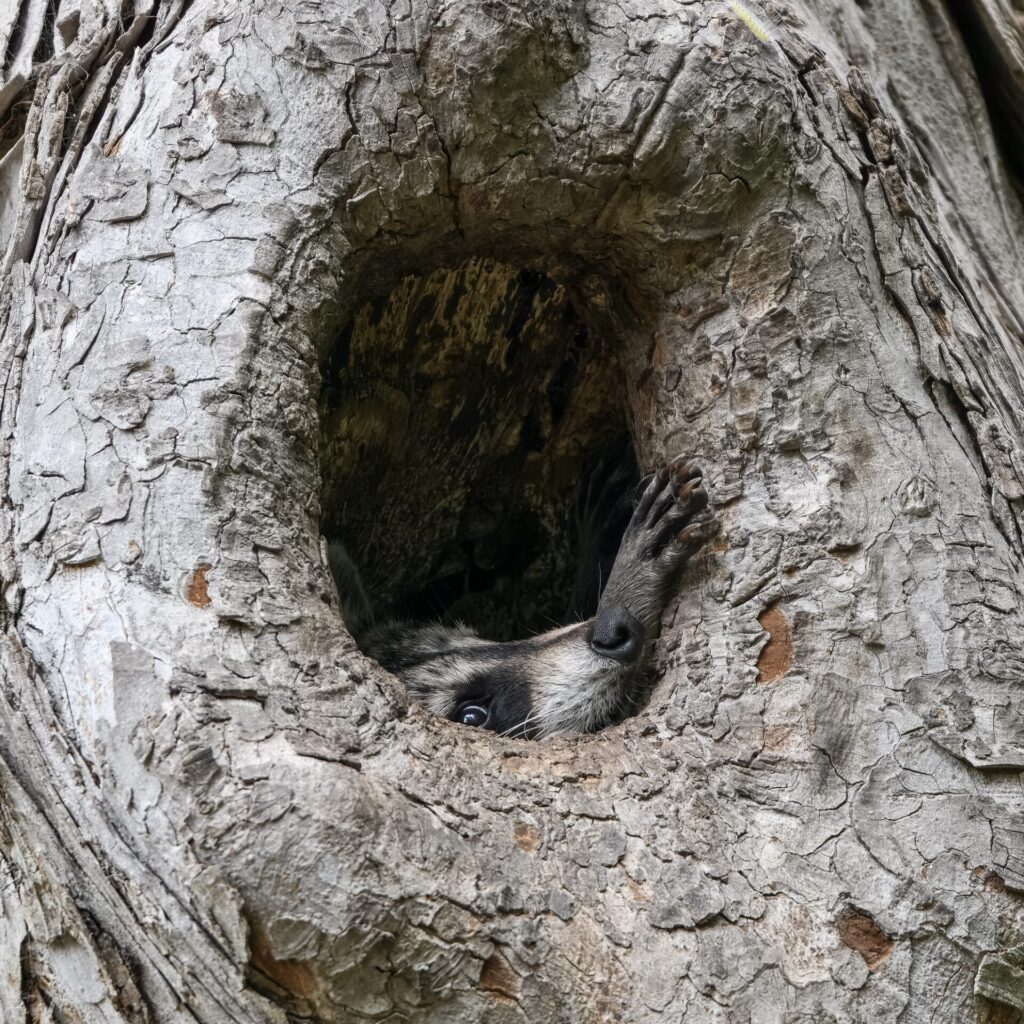
Speaking of scavenging, that’s just one of the many things that makes me… me — a raccoon! Today I want to teach you all about my extended family. We can be found all over Texas; from the eastern forests to the southern shores and even in your own backyard! You might have a hard time spotting us though, since we’re all nocturnal, meaning we like to come out to party at night. But don’t worry, I’m here to give you the inside info on raccoons so that you can learn what it’s like to live like a trash panda too!
Raccoons can be found not just in Texas, but all across North America. You can recognize us by our bushy ringed tails, our five- fingered hands and, of course, our classic black face mask. Our diets include fruit, nuts, fish, and anything left over by humans in the trash! This makes us omnivores because we eat both plants and meat. We’re more similar to humans than you might think!
Here in Texas, every raccoon you see will be a Common Raccoon (or a Procyon lotor, if you want to be fancy). You might not have known that there are three subspecies of Common Raccoon, which means we have different physical traits, but we’re still the same kind of animal. Think of us as cousins in one big extended family. We have also all appeared in the San Antonio River Basin! It takes a sharp eye to spot the differences between us, so let’s break it down.
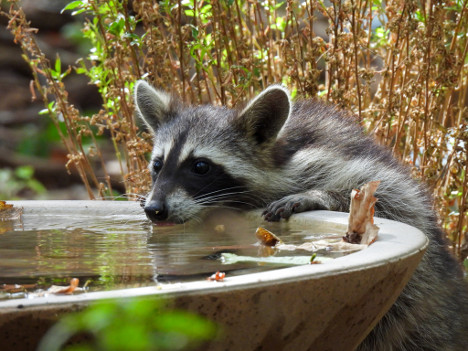
The Common Raccoon is the most widespread of the raccoons in Texas. When you imagine a raccoon in your mind, it’s probably us! Common Raccoons can grow up to 2 feet long and weigh 10 to 30 pounds. We’re most often found in eastern Texas in wooded areas and along riverbanks. We’ve also adapted to big city living too! You might find us opening trash cans in search of a late-night snack or climbing a streetlight to catch insects. We can do this because of our highly adapted front paws, which have the dexterity to manipulate objects with great precision. We even have five fingers on each hand, just like people do!
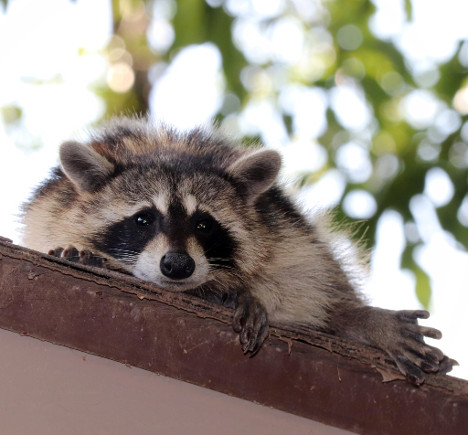
The Texas Raccoon (P. l. fuscipes, also called the Northern Raccoon) is native to central and southern Texas. Compared to Common Raccoons, they appear more slender and slightly smaller. They are most recognizable by their darker face mask and reddish-gray colored fur. My country cousins prefer to live out in nature, making a home for themselves in hollow trees or abandoned burrows. Because of the warmer climate they live in, Texas Raccoons do not grow a winter coat. Instead, they keep their lighter coat all year long. Talk about roughing it!
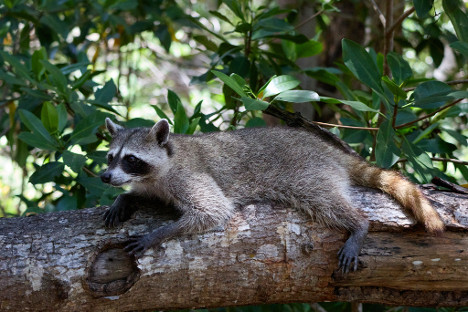
Last but not least, the Mexican Raccoon (P. l. hernandezii)! If Common Raccoons are city kids and Texas Raccoons are cowboys, then Mexican Raccoons are the fishermen! Known in Spanish as the Mapache, this is the rarest subspecies of raccoon in Texas. Most often seen along the southern border, they like to live in mangrove swamps. Those are wetlands along the Gulf Coast filled with trees and shrubs adapted to the salty water. Their diet consists primarily of fish, frogs, and shellfish. Because of the time they spend in the water, their bodies have adapted to be smaller, slimmer, and to have shorter fur to make swimming easier.
Be a Basin Bestie Too!
I hope you all learned a thing or two about raccoons! If you see one of us in your neighborhood, all you have to do is wave hello! You don’t need to feed us because we can find food just fine on our own. If you want to help a raccoon near you, make sure you do what you can to reduce litter! Even though people call us trash pandas, it doesn’t make good food. If you see litter out in the wild, make sure you put it where it belongs: in the trash can with the lid closed. It not only helps us, but it keeps the San Antonio River Basin clean for everybody, including you!
Click here if you would like to learn more about supporting your local wildlife!
Thanks for joining me, everybody! I hope you enjoy your time on the river! See you out there!
Author: Jackson Bearbower, Education and Engagement Intern

While pursuing a degree in Environmental Science, Jackson Bearbower was inspired by the San Antonio River Authority’s message and became a River Warrior volunteer. He furthered his experience by becoming a River Warrior Docent and he recently became the River Authority’s Education and Engagement Intern. As a member of the Public Affairs team, Jackson is excited to spread awareness about keeping our rivers clean, safe and enjoyable. He also hopes to inspire the same passion that led him to the River Authority and help create a new generation of River Warriors.
Sources
Chabannes, P. (2016, April 8). Procyon lotor fuscipes. Pierre Wildlife. https://www.pierrewildlife.com/searchspecies/mammals/carnivores/othercarn/procyonlotor/
Gale, J. (2025, October 23). What is a mexican raccoon called? Iere. org; Institute for Environmental Research and Education. https://iere.org/what-is-a-mexican-raccoon-called/
iNaturalist. (2025). iNaturalist.org. In iNaturalist.org. INaturalist. https://www.inaturalist.org/
Texas Parks and Wildlife. (2025). Common raccoon (Procyon lotor). In tpwd.texas.gov. Texas Parks and Wildlife. https://tpwd.texas.gov/huntwild/wild/species/raccoon/