

What persuaded you to join the River Authority’s Environmental Advisory Committee (EAC)?
Coming back from Iraq in 2009, I intuitively knew that I wanted to spend more time in nature to help heal my spirit and mitigate the effects of anxiety and PTSD. I started visiting more state and national parks every weekend and ended up being a volunteer at Colorado Bend State Park, where I found out about the Master Naturalists. I joined the chapter in San Antonio—eventually becoming the Programs Director and then Vice President. It was through the Master Naturalists that I learned about the River Authority and the opportunity to serve on the EAC. I started establishing relationships with River Authority employees, and once there was an opening on the EAC, I was invited to apply. Thanks to River Authority staff Minna Paul, Steven Schauer, and former General Manager Suzanne Scott, who encouraged me to join. It has been amazing, and I am glad to still be here.\

What have you learned about the San Antonio River since joining the EAC?
Oh gosh, there’s so much I have learned. One of my favorite projects is the freshwater mussel reintroduction program led by the Environmental Sciences team. I have also learned so much about the history of the river – how in the past our rivers were channelized for flood control. Now, however, we understand that trees, grasses, and various kinds of native plants help absorb the water and that big tree trunks and rocks help to dissipate the flood energy. I have also enjoyed learning about the river’s connection to the aquifer. Our Master Naturalist chapter has worked to remove non-native plants at the headwaters and replace them with native species.

How has your past experience contributed to your passion and commitment to keeping our natural spaces safe and accessible?
Well, I grew up in Texas, and my ancestors have been here for thousands of years, if not longer. We have always felt a connection to nature. Growing up in Corpus Christi, spending time with my family fishing and enjoying the sun was an integral part of my childhood. I can remember one of my favorite things to do in the summer while growing up in Corpus Christi was going to Garner State Park, where I was fascinated by the Frio River. When I started working with the Master Naturalists and partner organizations like the Greater Edwards Aquifer Authority, I began to understand the connectivity of all our waterways – how important it is to protect them and to mitigate the effects of rising water demand, usage, and climate change.

Currently, I organize group trips with Latino Outdoors for non-native English speakers. Oftentimes, ESL (English as a Second Language) kids hang back and do their own thing, so seeing their faces brighten up when they hear Spanish is so special. Connecting with them and inspiring them to connect with nature is a great feeling.
What draws you to the river now? Do you have a favorite part of the river or a favorite activity?
The beauty of the river draws me to it. I love showing friends who come from out of town how beautifully developed it is, especially along the Museum Reach and Mission Reach. Even after only 20 years of restoration, the trees are already so big and the river so biodiverse. My favorite part of the river is the dam below the Alamo Street bridge, because that’s where I see the most water snakes! They like hiding in the limestone cracks, so if I want to go look for water snakes, the dam is the first place I go.
How can we protect our creeks and rivers to make sure they are still healthy for future generations?
The River Authority is doing everything it can to advocate for our river. We need to encourage everyone to use water more wisely, keeping the future of our aquifer in mind. Planting more trees will help keep urban temperatures cooler and reduce evaporation. Encouraging developers to move away from non-native grass and install permeable parking lots will allow water to seep into the ground instead of flowing away as runoff. I also work with the Texas Parks and Wildlife Department River Studies office, where we educate riverside landowners on how to help protect their land along the river. Even just leaving a 5–10-foot easement at the water’s edge where native grasses can grow helps mitigate flooding issues and keeps the bank healthy.

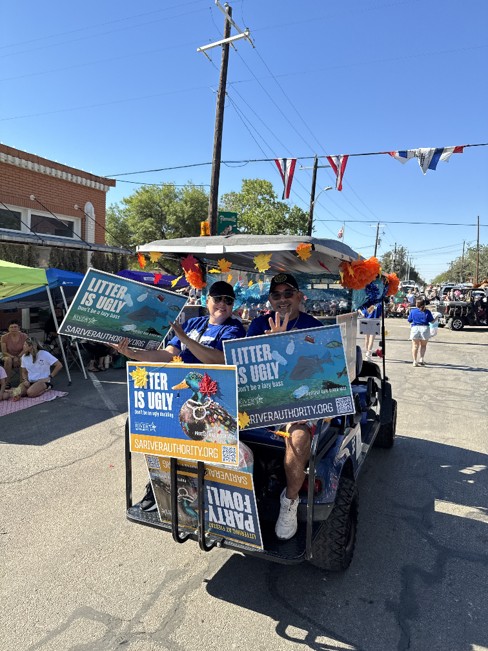
I want more people to understand that our river is the spiritual heart of our city. I think the best way to understand this is to encourage people to spend time by our waterways but also to participate in watershed cleanups. Learning about our litter problem gives us a sense of ownership and makes us more conscientious about trash and single-use plastics. Hopefully, that ownership will help our community think of new ways, small and large, to protect our river.

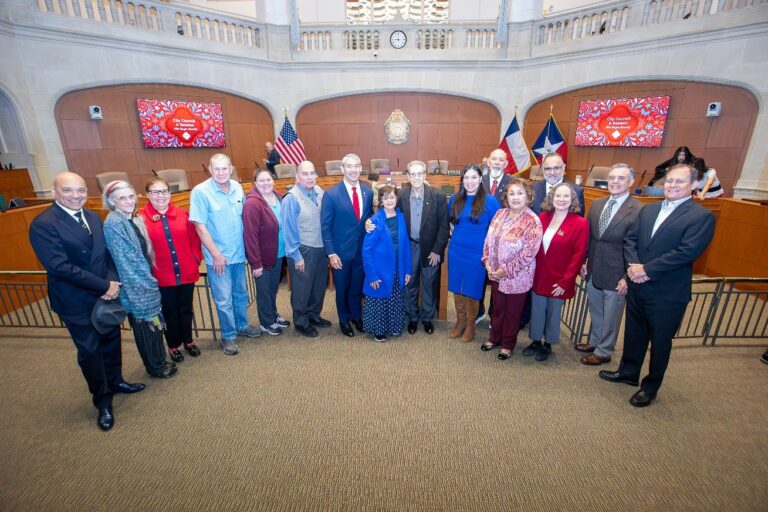
Today’s blog is contributed by Joedy Yglesias. Joedy is a Navy veteran, Texas Master Naturalist, and proud committee member to the San Antonio River Authority’s Environmental Advisory Committee (EAC). Having grown up alongside the Texas coast, water conservation is a core tenant of his advocacy. He spends his free time connecting with naturalist communities like Latino Outdoors and exploring Texas State Parks.
Thank you, Joedy, for sharing your story and inspiring actions for healthy local creeks and the San Antonio River. For more information about the River Authority’s EAC, visit our website.
Share Your Story
What do you love about your waterway? Do you have fond memories of growing up, playing along one of the creeks? Do your family traditions include celebrating holidays or special events at a park near the water? Does your ideal day off work involve fishing, going for a walk or paddling the river? Whether you’re in Bexar, Wilson, Karnes, or Goliad counties, we want to hear how one of the waterways in the San Antonio River Basin has made a positive impact on your life. Head to the My River Way oral history project page to share your story today!