
Last Updated on October 17, 2025
Among the most productive ecosystems on Earth, wetlands provide numerous essential functions. From acting as a buffer for flood and drought to providing habitat to countless species, they have an irreplaceable role in the ecology of the San Antonio River watershed. Unfortunately, the rapid loss of wetland habitats has had devastating consequences that often go unacknowledged. In this blog we’ll look at how wetlands work, why they are important, and what the San Antonio River Authority (River Authority) is doing to protect wetlands throughout our watershed.

What is a wetland?
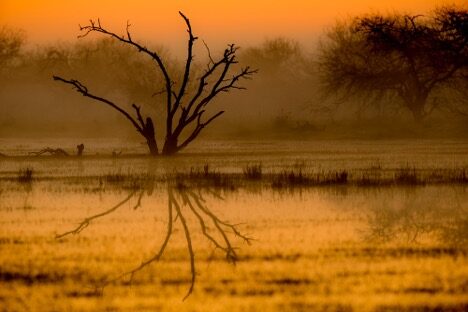
Wetlands are the transitional areas between deepwater ecosystems—like rivers, bays, estuaries—and dry land. Covered by a shallow layer of water, wetland soil is completely saturated, either permanently or seasonally. Wetlands, which include marshes, bogs, and swamps, don’t just occur near the coast. Inland wetlands combine with small streams in the upper parts of our watershed, far from San Antonio Bay, to influence the character and quality of life downstream. This provides the ideal habitat for countless amphibians, insects, shellfish and other semi-aquatic creatures. These critters attract larger predators and migratory birds, increasing the biodiversity of the ecosystems.

This graphic demonstrates how wetlands work and the many benefits they provide for the health of our environment. Photo Credit: Ducks Unlimited Canada.
Why are wetlands important?
Wetlands are an essential, irreplaceable part of our ecosystem, playing a huge role in drought prevention, flood mitigation, and water filtration! Think of a wetland like a sponge—during heavy rain events, they swell, collecting excess runoff. Wetlands store this water much like a natural reservoir. Wetland water storage is crucial for drought prevention, as the reservoir slowly releases water into the environment, providing life to the ecosystem for a longer period. Additionally, while the water is being stored, plants filter the stormwater runoff by taking up excess nutrients that would otherwise flow into our creeks and rivers. When wetlands are lost, we also lose a natural buffer to flood, drought, and water pollution.
Wetlands also provide an ideal habitat for an array of animals. They supply a biodiverse, nutrient-rich, protected home for aquatic and semiaquatic animals who are raising their young. This biodiversity attracts migratory birds that depend on wetlands for food and shelter. For example, critically endangered whooping cranes rely on the wetland habitat of the San Antonio Bay, where the San Antonio River meets the Gulf. After a long migration from Canada, Whooping Cranes depend on the wetland’s fresh water to provide them with food and refuge before their journey back to their nesting grounds up north.

In urban areas, wetlands play an important role in reducing the urban heat island (UHI) effect—a phenomenon where urban areas become warmer because of human activities and lack of vegetation. Urban wetlands can reduce UHIs through evapotranspiration- the combination of evaporation of water from the wetland, and the transpiration of water vapor from plants. As the water makes its way from the surface of the earth into the atmosphere, the surrounding area cools. Wetlands can also absorb heat, and their plants provide shade, reducing the UHI effect further. You can experience a great example of this phenomenon by visiting the San Antonio River’s Mission Reach trails on a hot summer day! Walking down the steps at Confluence Park from street level to the river, you can immediately feel the cooling effect.
How does the River Authority protect wetlands?
Wetlands have been disappearing rapidly around the world. Factors like urbanization, climate change, and agricultural development have led to the loss of many wetlands in America. With the loss of these wetlands comes an increase in flooding, and less habitat for species that rely on wetlands for food and shelter. However, all hope is not lost! The River Authority works hard to protect our wetlands, and you can too.
Here at the River Authority, we strive to restore, maintain, and protect the San Antonio River Watershed, including many inland wetland habitats at risk of development. Habitat restoration projects like the one along the Mission Reach have revitalized wetland habitat in San Antonio. River Authority engineers use nature-based solutions and Low Impact Development to protect existing wetlands from the impacts of increased urban runoff and mimic wetlands on a small scale in urban areas. If you walk along the river, you might spot small, constructed wetlands like the one pictured below. Like natural wetlands, they make urban streams more resilient to the impacts of flash floods by reducing the risk of erosion and habitat degradation. They also help filter stormwater runoff pollution and provide small semiaquatic habitat pockets for urban critters!

Be a Wetland Warrior!
You can help protect local wetlands, too! To aid in the protection of local wetlands through litter cleanups and habitat restoration projects. The San Antonio River watershed takes care of us, so let’s step up and take care of it!