“Wait… that’s not a duck!” Introducing South Texas Native, the Neotropic Cormorant!

Written by:

Posted on:

Categories:

Share:

Facebook
Twitter
LinkedIn
Email

Get The Latest:

Join our print or digital newsletter to be informed about the agency’s many projects and other news.

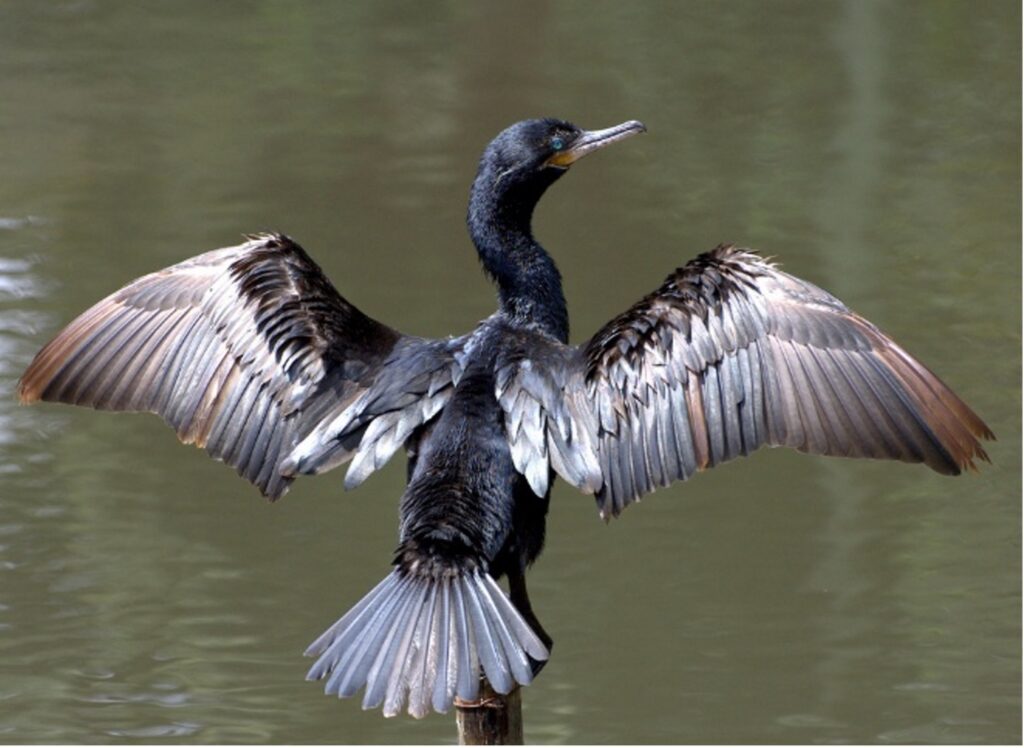
Neotropic Cormorant bird with wings outstretched

A familiar sight along the San Antonio River: a Neotropic Cormorant drying its feathers.

There are many exciting opportunities to see unique creatures when exploring the banks of the San Antonio River! One such creature is a majestic, dark, migratory waterbird that perches proudly against the sun, drying its feathers while totally undisturbed by the hustle and bustle of nearby walkers, bikers, and anglers.

The star of this story is the Neotropic Cormorant, Phalacrocorax brasilianus. The San Antonio River Basin is home to two of the six cormorant species in North America, the Neotropic, and the Double-Crested. Of the two, the Neotropic Cormorant particularly catches the human eye because of a unique white V-shaped border around its bill. This marking makes it look as though it is smiling at the world around it! This feature, along with smaller body size and longer tail feathers, differentiates the Neotropic Cormorant from the larger Double-Crested Cormorant. A third bird, called the Anhinga, has a snake-like elongated neck and body, making it challenging to tell them apart from cormorants. These are the three musketeers of the San Antonio River!


From Left to Right: A Double-Crested Cormorant, Neotropic Cormorant, and Anhinga. One way to tell the Cormorant apart from the Anhinga is the shape of the bill. Anhingas have pointed bills while cormorants have a hooked bill. Cormorants also have a yellow or orange color around their bill, while Anhingas do not.

Neotropic Cormorants can often be seen paddling through the water with their S-shaped necks sticking out. If you’re lucky, you may see these birds plunge-diving for fish in the river. Once they have caught unsuspecting fish, it is fascinating to watch them come up to the surface of the water with their prize and gulp it down, head first. Sometimes they even partake in a bit of teamwork by fishing communally. These intelligent creatures will sit in a line, startle the fish and pursue their pray as a team. Cormorants aren’t just fish eaters, though: they will feast on insects, crustaceans, and even amphibians if the opportunity arises!

Neotropic Cormorants are monogamous and breed in single or multiple-species colonies, primarily along the coast. These birds can even be considered modern-day masons! They make platforms of stick nests in trees and shrubs, sometimes using bat guano to cement their materials together. Hunting these elegant birds is unlawful. Their diet consists of small fish, making them an essential link in the ecological food web that keeps everything in balance.

We can do our part to work for safe, clean, and enjoyable waterways that benefit cormorants and humans alike. A straightforward action is disposing of waste and recycling properly. This helps ensure that plastic and other pollutants are kept out of the river.

An Unfortunate consequence of litter in the river: River Authority staff captured this video of a Double-Crested cormorant trying to remove a fishing hook lodged in its tail.

The next time you see one of these handsome living statues on the river, make sure to stop and appreciate their elegance. They will not consider it rude! Instead, they will say, “Come tell us apart if you can!” Are you up for this unique avian challenge?

Keep on the lookout for another South Texas Native feature in our blog next month on drumroll… the Cochineal insect!


Related Articles

Alerts

Mission Reach Area Maintenance

Update (December 2025):
Crews will be moving south of Concepcion Park towards the baseball fields around the Mission Road area. The trail in this section will be closed the morning of Wednesday 12/10 and is expected to reopen the later next week. 

Work will also continue at the current location near mile marker 8.2 for the remainder of the week, where crews will be cleaning the area and hauling off chips and debris. This section of the trail will remain open

When: Beginning October 20, 2025 through Spring 2026
What: Crews will be performing stem-density removal and related vegetation maintenance along sections of the Mission Reach to help manage flood risk and protect surrounding infrastructure. Some trails or segments may be closed temporarily while work is underway.
Why: Removing excess stems that naturally establish along the river helps maintain stormwater conveyance, reduces flood risk, and protects public infrastructure while allowing grassland and native vegetation to recover and thrive.
What to expect:

  • Limited trail closures and intermittent work zones.
  • Crews and equipment working near the riverbanks during daytime hours.
  • Parking areas remain open, but visitors may see signage and temporary barriers.

Questions? Call the San Antonio River Authority at (210) 227-1373 or visit https://www.sariverauthority.org/services/river-health/ecosystems/.

Thank you for your patience while we keep the Mission Reach safe, clean, and enjoyable.

Stem Density work 12.10.2025-12.19.2025

Trail Closure – Mission Reach Area

The Acequia Park trailhead entrance at Probandt Street to the Bexar County Public Works Department building’s trailhead will be closed through December 23rd due to construction. We apologize for the inconvenience.

Trail Closure Alert – Calder Alley, San Pedro Creek

Maintenance work will be done in Calder Alley starting Wednesday, September 18, 2025.

  • Trails will remain open during this work.
  • One bench at a time will be temporarily barricaded while improvements are completed.
  • There may be occasional contractor pickups in the area.

We appreciate your patience as we continue to maintain and improve San Pedro Creek for all to enjoy!

SASPAMCO Paddling Trail

The SASPAMCO paddling trail is open from River Crossing Park to Helton Nature Park.
*Please Note: Paddling Trail from Helton Nature Park to HWY 97 is still closed due to blockages. 

SASPAMCO Paddling Trail Temporarily Closed

Staff have removed two large log jams just downstream of Helton Nature Park, keeping the southern portion of the SASPAMCO Paddling Trail temporarily closed. Staff are working to contact adjacent landowners to support a land-based removal solution.

Goliad Paddling Trail Alert

NOTICE: HWY 59 Landing Site Closed

Due to TxDOT construction on the HWY 59 Bridge, the HWY 59 landing site is closed until further notice. However, the Goliad Paddling Trail remains open, and paddlers can still access the river at the Riverdale, Ferry Street, and Goliad State Park landings.

Please plan accordingly and check back for updates.

River Reach Newsletter and Blog Signup

River Reach is offered as a printed, physical mailing to your residence or business. The Blog is a weekly electronic email with news and updates in order to be more environmentally conscious. Please fill out the form below and indicate your preferred method of delivery.

By submitting this form, you are consenting to receive marketing materials from: San Antonio River Authority, 100 East Guenther St., San Antonio, TX, 78204, US. You can revoke your consent to receive emails at any time by using the SafeUnsubscribe® link, found at the bottom of every email. Emails are serviced by Constant Contact. This site is protected by reCAPTCHA and the Google Privacy Policy and Terms of Service apply.