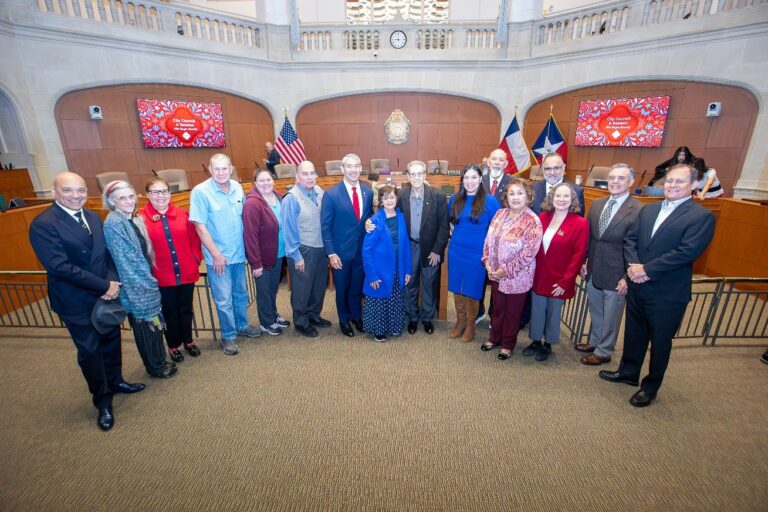

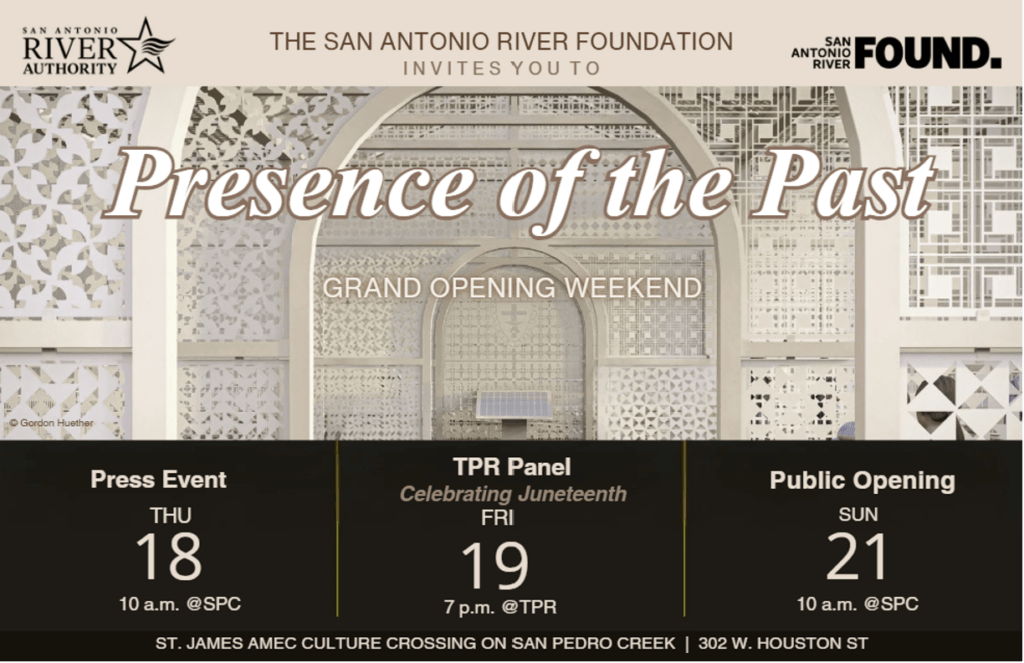
Join the San Antonio River Foundation for three days of celebration this Juneteenth weekend, June 19–21, as we unveil Presence of the Past—a landmark public artwork by Gordon Huether in collaboration with Andrea “Vocab” Sanderson. The installation honors the legacy of San Antonio’s African Methodist Episcopal congregation and the vibrant communities that have shaped San Pedro Creek and downtown San Antonio for generations. This event is part of a larger tradition — one rooted in the waterways that have always brought us together.
Every June, communities across the United States celebrate National Rivers Month. It’s a time to recognize the essential role rivers play in our daily lives, from providing clean water to supporting agriculture and recreation. What began as a conservation initiative has grown into a larger movement that encourages communities to take action through education, advocacy, and local stewardship.
So, what does that mean for the San Antonio River and our community?
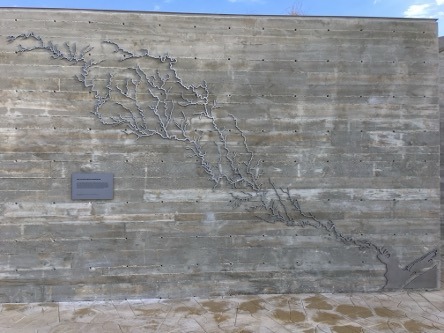
For generations, the river has served as both a gathering place and a source of life. Long before European settlement, Yanaguana Springs provided clean water that sustained Indigenous communities for centuries. When the Spanish arrived in 1691, they settled near San Pedro Creek, where the springs became an essential stop for expeditions into Texas. After June 13, 1691, Yanaguana became known as the San Antonio River, and its clear, flowing waters helped shape the city that would grow along its banks.
As San Antonio developed, it became a place where many cultures converged. Much like a watershed, where creeks and rivers flow together, the people of San Antonio brought diverse traditions, histories, and experiences that intertwined to shape the city we know today.
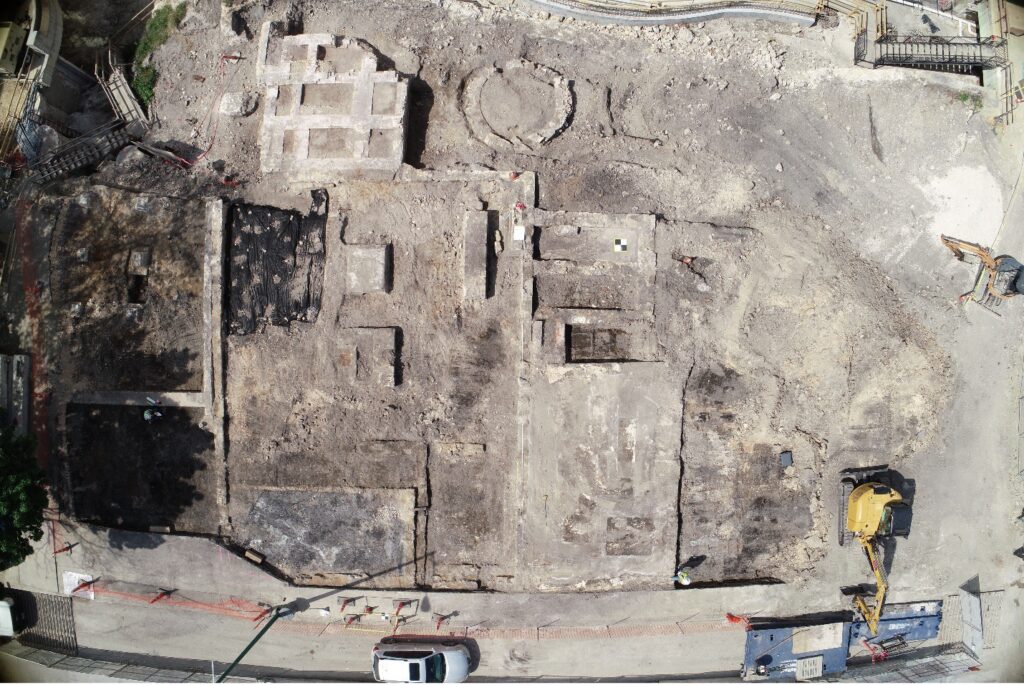
From the early Spanish exploration of Tejas through the fight for independence, statehood, and into the present day, people of African descent have helped shape the region’s history and cultural identity. Through both forced and voluntary migration, San Antonio became home to African Americans, Afro-Mexicans, Afro-Indigenous peoples, Afro-Caribbeans, and Native Africans. Between 1867 and 1878, the first African Methodist Episcopal (AME) church in San Antonio was established there. Today, the discovery of the St. James AME Church cornerstone during the San Pedro Creek reconstruction in 2020 reflects the rich cultural history and diverse communities that shaped San Antonio. Preserved through community input and careful restoration, the site now serves as a gathering place that connects the past and the present.
The artwork that now occupies the site draws inspiration from another powerful symbol of resilience: the freedom quilt. According to tradition, enslaved men and women incorporated coded messages into quilt patterns that could help guide those seeking freedom along the Underground Railroad. While quilts provided warmth and comfort, they also became symbols of hope, resistance, and the pursuit of liberation. Today, these patterns continue to represent the strength, creativity, and perseverance of generations who endured hardship while preserving their culture and community.
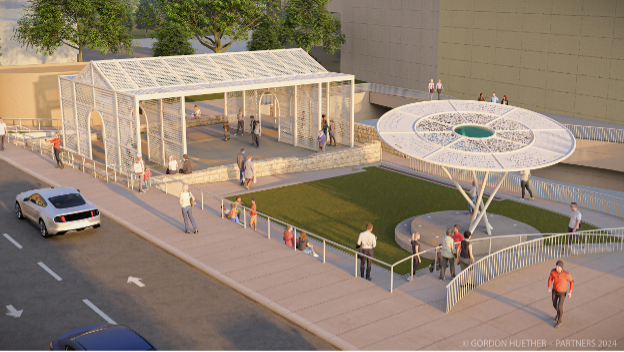
Artist Gordon Huether (Napa, California) incorporates these historic quilt patterns into Presence of the Past, using them to outline the façade of San Antonio’s first AME church as it stood between 1867 and 1878. An AME shield guides visitors to an altar honoring the church’s original parishioners and their lasting contributions to the city.
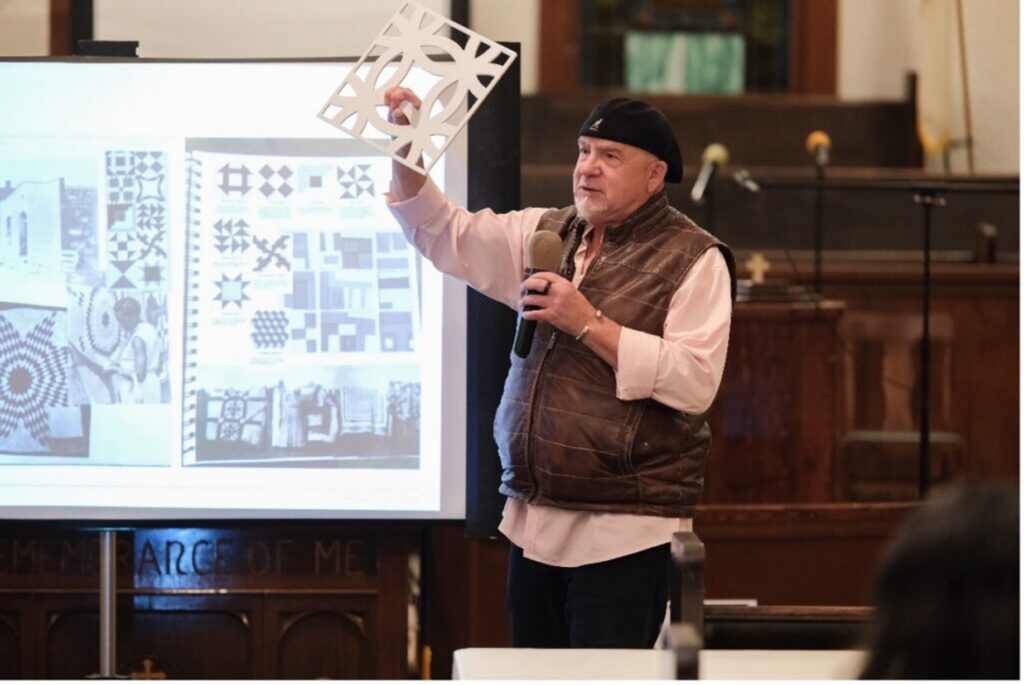
The Community Engagement Pavilion extends this story into the present through personal quilt patterns and a collaborative poem by San Antonio Poet Laureate Emeritus Andrea “Vocab” Sanderson. Created alongside church members and the broader community, these works weave together individual stories into a shared tapestry that celebrates the enduring legacy of St. James AME Church and the diverse communities that continue to shape San Antonio.
Today, the San Antonio River continues to be at the heart of our community, not just as a historic landmark, but as a space for conservation, recreation, education, and connection. One of the best ways to celebrate National River Month is simply by getting outside and experiencing the river for yourself. Whether walking or biking along the trails of the river, exploring the Mission Reach and all its beautiful art activations, kayaking, or visiting spaces like Confluence Park, there are countless ways for our community to connect with this precious natural resource. So, take time this month and every month to get outside and explore the river that has shaped San Antonio for generations. When we care for our river, we care for our community.
__________
This piece was contributed by the San Antonio River Foundation. The River Foundation is the nonprofit partner of the San Antonio River Authority. The River Foundation supports scientific and educational activities that promote and encourage the conservation, stewardship, restoration, preservation, and enjoyment of the land and water resources of the San Antonio River Basin.