
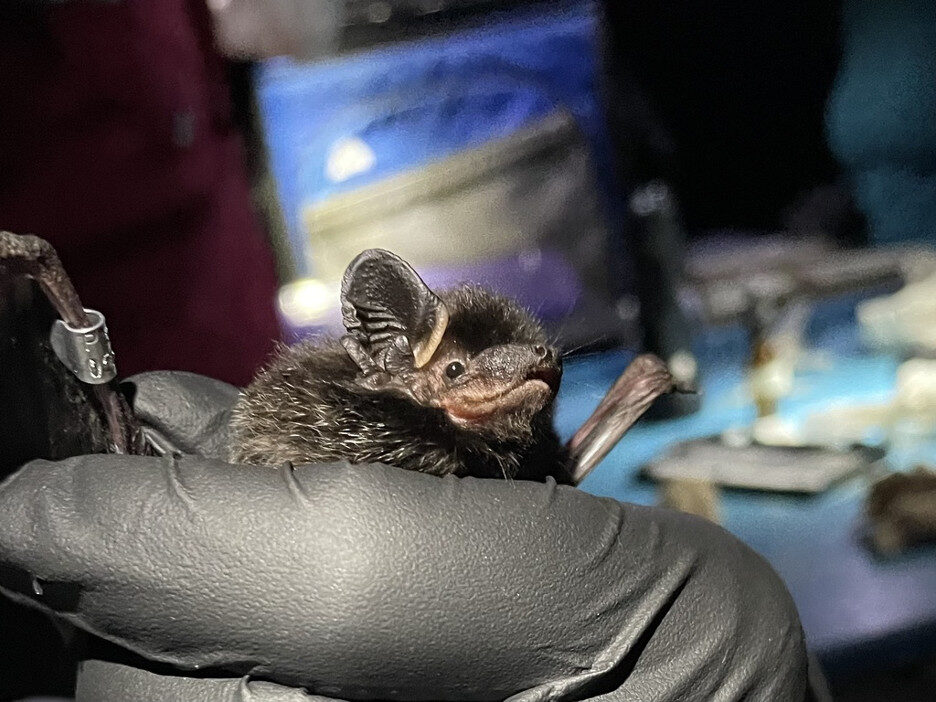
When you think of bats, what comes to mind? Vampire myths? Halloween decorations? Well, it’s time to hang up those old clichés and shine a spotlight on one of North America’s coolest, most underrated mammals: the silver-haired bat (Lasionycteris noctivagans). These sleek, shadowy flyers are more than just creatures of the night; they’re essential players in the ecosystems of our very own San Antonio River Watershed.
These bats get their name from their fur, which is dark brown or black with frosty silver tips. Weighing in at a mere 8 to 12 grams, they may be small, but don’t let their size fool you—these guys are expert fliers and savvy hunters. They belong to the family Vespertilionidae, or vesper bats, which means they’re evening-loving, insect-chomping powerhouses.
Home is Where You Roost
Silver-haired bats typically live throughout most of North America, from Canada all the way to Mexico, depending on the season. They are migratory bats, which means they travel with the seasons, heading north to breed in the summer and flying south in the fall to avoid the chill.

A silver-haired bat observed by a citizen scientist. Photo Credit: © Jeff Bartlett CCO on iNaturalist

A silver-haired bat observed by a citizen scientist.Photo Credit: © Jeff Bartlett CCO on iNaturalist
Unlike some bats that form massive cave colonies, silver-haired bats prefer a more introverted lifestyle. They’re considered solitary roosters, often bedding down in tree cavities or under bark. Occasionally, female silver-haired bats will form maternal colonies and live in groups together during the warmer months to take care of their young in a communal setting.
Bat-tastic Environmental Benefits
Here’s where silver-haired bats really earn their wings. These insectivores can eat up to half their body weight in insects every night. That means fewer mosquito bites and fewer pests not munching on crops. In fact, bats across North America save the U.S. agricultural industry up to 50 billion dollars each year in pest control. And if that wasn’t enough, their nutrient-packed guano (or droppings) enriches soil and promotes plant growth.
Protecting Bats in a Changing Landscape
Currently, the silver-haired bat is not considered endangered, but like many bat species, it faces threats from habitat loss, improper pesticide use, and a fungal disease called white-nose syndrome, which affects hibernating bats. Since silver-haired bats often migrate rather than hibernate, they’re not as vulnerable to this disease.

Depiction of White-Nose Syndrome in bats. Photo Credit: USFW Public Domain Photo Archive
Wind turbines are another rising concern. While clean energy is greatly beneficial, poorly placed turbines can be dangerous to migratory bats. Researchers are working on solutions to help reduce the risk, like adjusting the turbine operation during peak migration seasons.
From Bats to Butterflies: Celebrating Nature’s Pollinators
Even though the silver-haired bat sticks to insects, many other bat species are unsung heroes of the plant world, pollinating agave, bananas, mangoes, and more. From night-flying bats to daytime butterflies, pollinators of all kinds keep our world blooming—and that’s exactly what we celebrated at the Monarch Butterfly and Pollinator Festival!
On Saturday, October 18th, the River Authority joined thousands of festival-goers for a day of hands-on fun and important conversations about protecting our environment. Our incredible staff and superstar River Warrior volunteers brought the science (and the silliness!). We roamed the festival in litterbug costumes made of trash while picking up litter and sparking conversations about how pollution harms both land and water ecosystems.


We wowed the crowds with a non-point source pollution demo, showing how litter on the ground ends up in our waterways. Families played our “How Long Until It’s Gone?” pollution game, learning about how plastics break down into microplastics when littered rather than actually biodegrading. Kids and adults had a blast identifying benthic macroinvertebrates (AKA river critters!) that our scientists collected from the river on the festival grounds. The verdict? The pollution-sensitive species they found told us the river was clean!

We also invited families to take the Pollinator Pledge, promising to protect these important organisms that keep our ecosystems thriving. From land to stream, we showed how healthy habitats for pollinators and aquatic life go hand-in-hand. Together, we’re turning awareness into action, one fun fact (and one funky trash costume) at a time!

Small Bat, Big Impact
Silver-haired bats may not get the fame of their cave-dwelling cousins, but don’t underestimate these fuzzy little flyers. With their frosted fur, stealthy flight, and insatiable appetite for agricultural pests, they are a quiet guardian of our forests, farms, and backyards. So, the next time you see something flutter past your porch light, give a little nod of appreciation. It might just be a silver-haired bat out on a nightly patrol, doing its part to keep nature in balance.
Want to learn more about Texas bats? Check out these resources!
Bat Conservation International