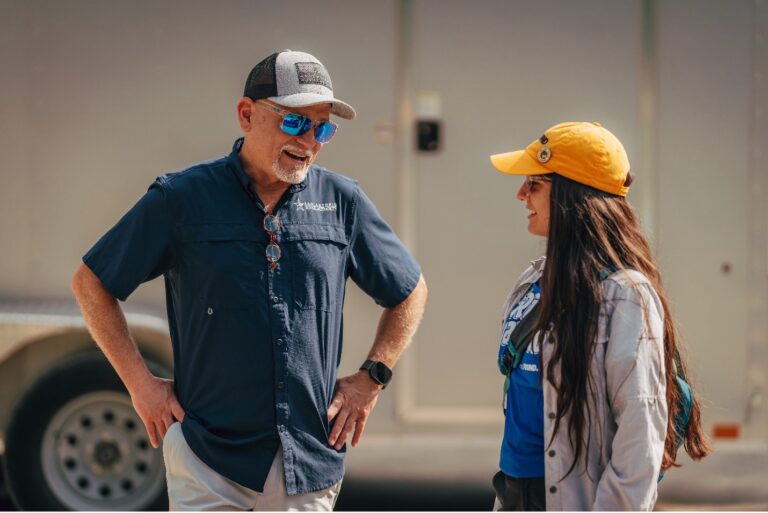


Figure 1. Aquatic biologists survey and net fish around a bank habitat.
We’re back with fresh insights from this year’s Mission Reach Intensive Nekton Survey (MRINS)! You might be wondering—what is a “nekton”? Although it sounds like the newest form of cryptocurrency, “nekton” is science-speak for an actively swimming aquatic organism, or more simply, a fish!
This biannual weeklong effort is conducted throughout the restored Mission Reach — a 9-mile section of the San Antonio River that was outfitted with natural instream habitat and wide native riparian corridors. MRINS was designed to evaluate the success of ecological restoration by monitoring long-term changes in the fish and habitat communities. Data collected through this effort is intended to inform restoration and management strategies in the future. This year’s MRINS took place during the first full week of November.
Objectives and highlights of the 2025 MRINS include:
- Document ecological uplift by tracking native fish populations
- Monitor the overall number of species in the Mission Reach
- Evaluate popular game fish populations
- Track host fish movement and abundance to support the reintroduced freshwater mussel population
- Assess the overall health of the river ecosystem
- Collaborate with agencies and universities to develop and answer research questions that guide water resource management
Let’s take a look at some of the highlights for 2025!
A Banner Year for Native Fish Species
Compared with years past, the 2025 MRINS saw an increase in both the number and species of fish. This year, there were a total of 5,278 fish caught within the surveyed area — a substantial increase from the 2,800 caught back in 2023. Of the 28 fish species caught, 88% of all individuals were native to the San Antonio River, including Channel Catfish, Largemouth Bass, Guadalupe Bass, Spotted Gar, and more!

Figure 2. Number of individual fish and number of species recorded for the Mission Reach Intensive Nekton Survey by year.

Figure 3. Aquatic biologists performing a deep pool sample at Davis Lake.
Where Kayaks Chute and Fish Scoot
This year’s data shows that a variety of fish are using the many kayak chutes along the restored Mission Reach. What stood out most was that most species found in these chutes were smaller-bodied native fish, including Mimic Shiner, Blacktail Shiner, and Red Shiner, which only reach about 2–4 inches in length as adults. Because smaller fish often struggle to move through high-velocity sections of a river, finding them in the stronger, more concentrated flows of the chutes is encouraging. Larger-bodied species such as Guadalupe Bass and Channel Catfish were also found in the chutes, suggesting that the chute design is successfully supporting the movement of fish across all size classes and swimming abilities. This in turn will provide fish and other aquatic species with a wider range of habitat types, spawning grounds and feeding locations for them to continue their roles within the river. In addition, it also highlights that even the recreational features within the river can serve as viable habitat and network systems for aquatic life in the San Antonio River.
Learn more about the River Authority’s fish passage efforts.

Figure 4. Aquatic biologists performing a fish survey in one of the Mission Reach’s kayak/canoe chute habitats.

Figure 5. Species and quantity of species caught within the kayak/canoe chute habitat within the restored Mission Reach area.
Bass Bonanza: Hot Spots for Your Next Catch
If you’re looking to do some recreational game fishing, we are here to help! Surveys conducted by the River Authority revealed that Guadalupe, Largemouth and Spotted Bass are being caught throughout the entirety of the restored Mission Reach. This finding further reinforces that the restoration has created and continues to provide conditions that allow for sizeable sport fishes to thrive, including good flow, water quality, and ample prey availability.
If you want to increase your chances of catching a bass along the Mission Reach, there are a few hot spots you can check out including the Eagleland section (from Alamo Street down to the Lone Star Railroad Trellis) and the section of the river below the Espada Dam. The Mission Reach has incorporated several angler fishing pads and docks along the river. Although there are no designated access sites south of Espada Dam, there are still opportunities for bank fishing in that area. Using designated access sites (with a valid fishing license, of course!) is the best way to enjoy the river while protecting its natural banks. Native vegetation along the shoreline helps stabilize soil, support wildlife, and keep water clean. By sticking to man-made access points like fishing pads, anglers help prevent erosion and protect important habitat.

Figure 6. Aquatic biologists hold bass captured in the Eagleland section of the San Antonio River.

Figure 7. Number of bass caught in each section evaluated in the MRINS 2025.
Gar You Kidding Me?
One of the more exciting things we discovered this year was the amount of Longnose Gar and Spotted Gar in just one pool within the restored area! A total of 13 gar (Spotted and Longnose) were pulled out of a single trammel net sweep of about 20 meters. Given that there are several pools staggered within the Mission Reach, it is encouraging to know that these important host fish species for our native freshwater mussels are thriving and surviving in their preferred habitat!

Figure 8. Aquatic biologists hold Spotted and Longnose Gar captured in a pool downstream of Espada Dam.
Ready to experience the Mission Reach for yourself?
Whether you’re casting a line, enjoying the scenery, or looking for family-friendly events, the restored river offers something for everyone. Keep an eye out for upcoming fishing and community events along the river on our events page, and remember to always dispose of your fishing line, bait containers, and other items responsibly in nearby trashcans. By doing so, you help keep the river clean and safe for both people and wildlife. Stay tuned for more exciting fishing opportunities and discoveries along the Mission Reach—you never know what you might reel in next!