
Bloom Service! Six Native Plants that Steal the Spotlight

Written by:

Posted on:

Categories:

Share:

Facebook
Twitter
LinkedIn
Email

Get The Latest:

Join our print or digital newsletter to be informed about the agency’s many projects and other news.

Pink Evening Primrose

Did you know that April is designated as National Native Plant Month?  Texas has over 5,000 native plant species, which can be found in incredibly diverse habitats throughout the state. The San Antonio River Basin comprises many ecosystems where these diverse plant communities thrive and contribute to clean, safe, and enjoyable creeks and rivers. Join the River Authority’s Sustainable Landscape Ecologist Lee Marlowe as we take a closer look at six native plants with incredible spring blooms!
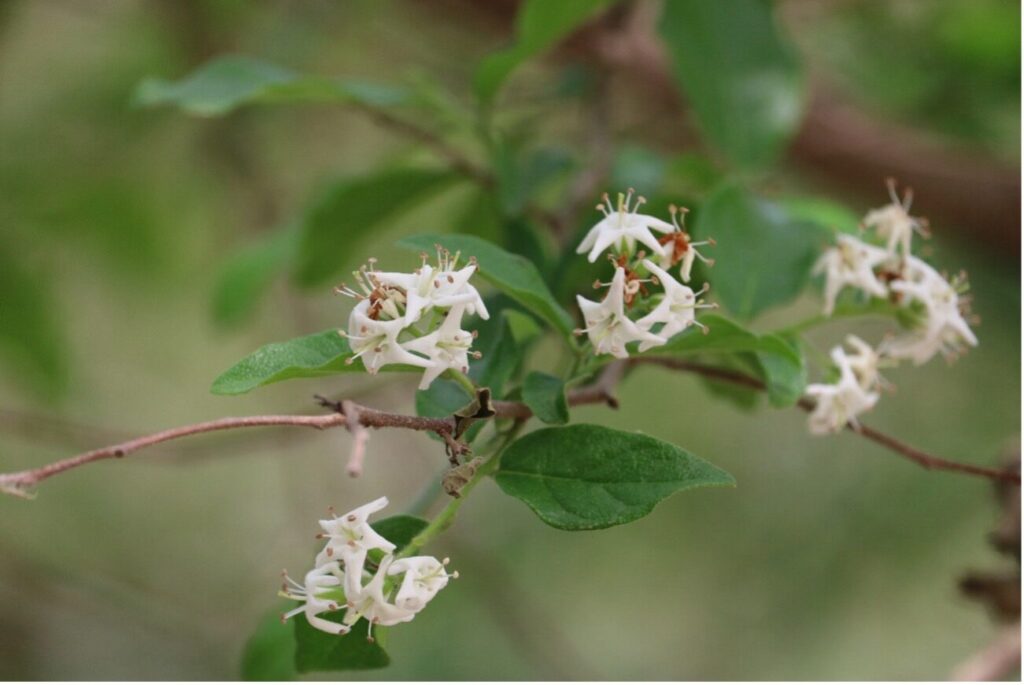
Anacua

Tree-mendous Texture and Sweet Scents: Anacua, Ehretia anacua

Clusters of white blooms cover the Anacua tree in spring, filling the air with a sweet smell. This large tree can grow up to 50 feet tall with flowers occurring during spring through summer. Also called Sandpaper Tree, the leaves feel like rough sandpaper­— making it easy to identify by touch. Although deciduous, the leaves often remain on the tree through winter providing evergreen color in the landscape. The flowers and bright orange fruits of Anacua provide food for pollinators, birds, and other wildlife. Because this tree provides an abundance of fruit, it is best planted in spaces where the fruit can freely fall.
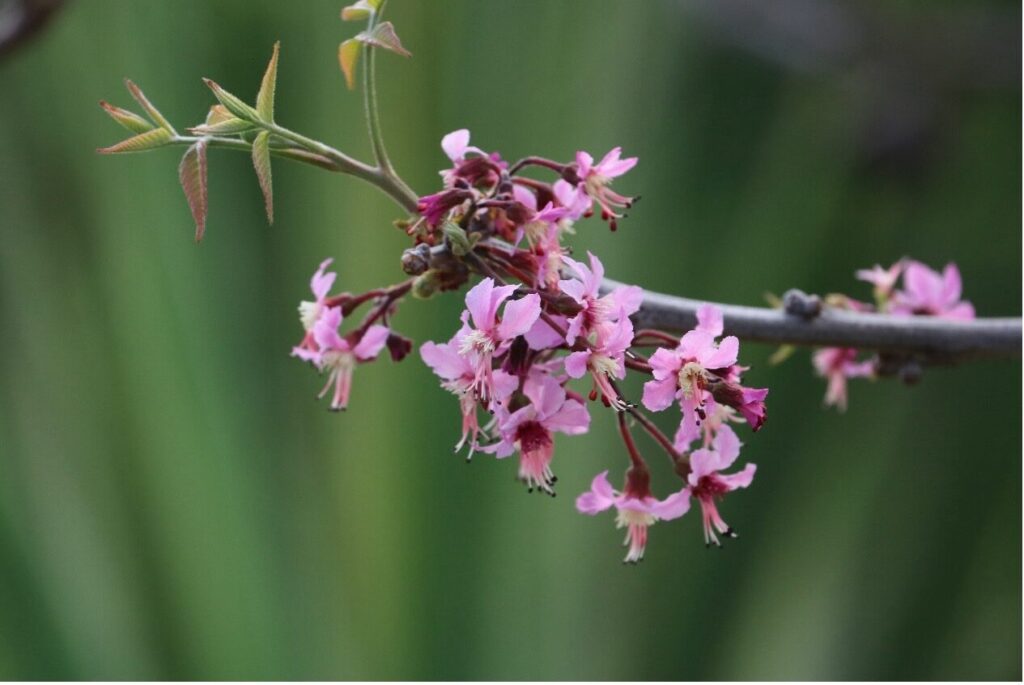
Mexican Buckeye

Blossoms and Baubles: Mexican Buckeye, Ungnadia speciosa

Attractive pink blooms cover the branches of Mexican Buckeye before or while the leaves emerge each spring. In addition to ornamental flower clusters, this native tree has interesting seed pods that look like ornaments hanging from its branches. Growing up to 30 feet tall, this understory tree is often used as a specimen plant or focal point in landscapes. Pollinators are attracted to its flowers and the seeds are eaten by birds and other wildlife.
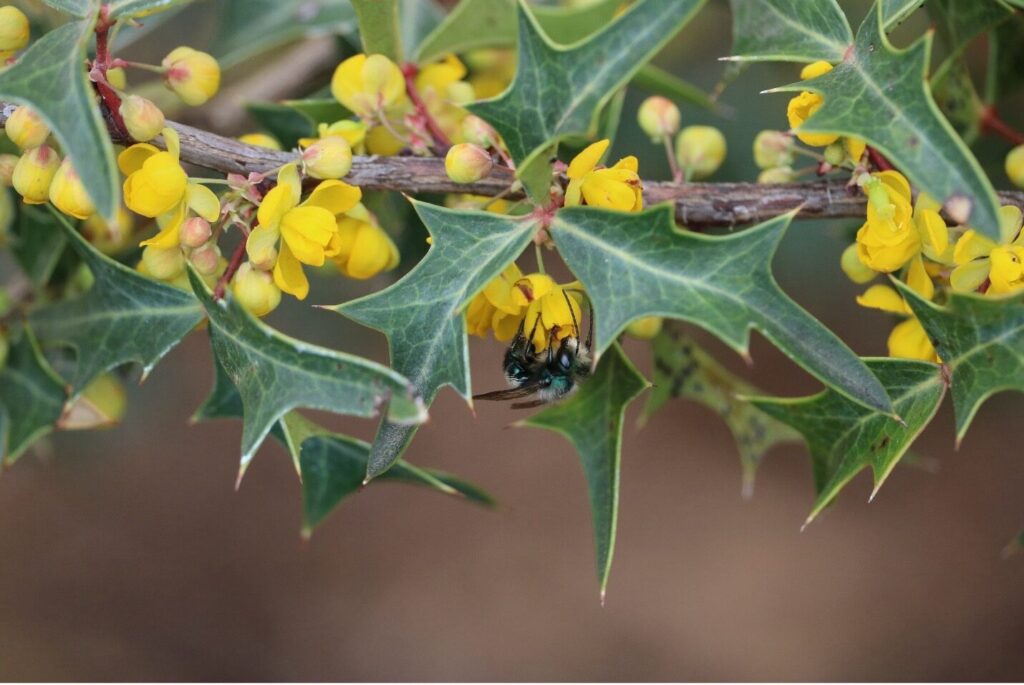
Agarita

Barbed Berry-ful Beauty: Agarita, Mahonia trifoliolata

Often one of the first plants to bloom in spring, Agarita is an attractive evergreen shrub growing up to 10 feet tall but usually reaching between 3 and 6 feet in height. Fragrant, bright yellow flower clusters cover the branches. The leaves are spiny, making this native plant a good choice for landscapes with deer pressure, and it can be used as a barrier planted around other ornamental plants that would normally be browsed by deer. The bright red fruits are ornamental and a favorite food of birds and other wildlife.
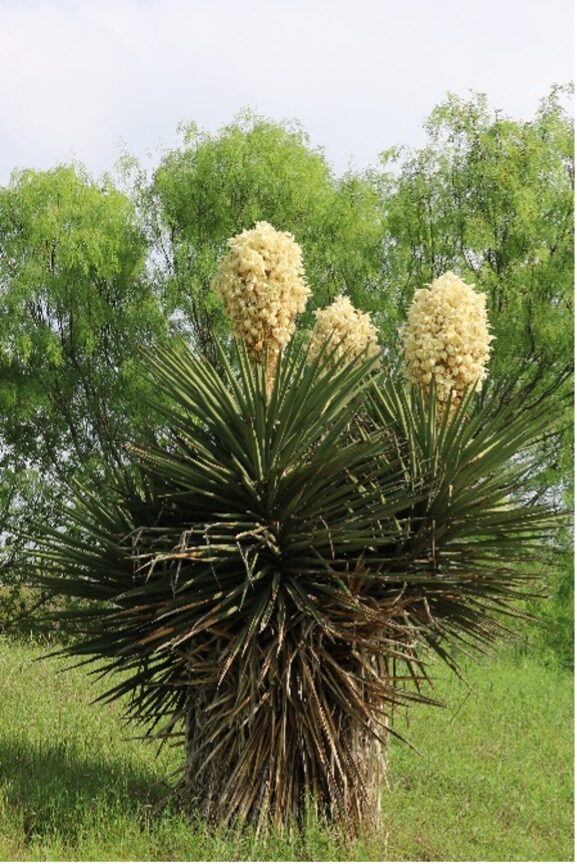
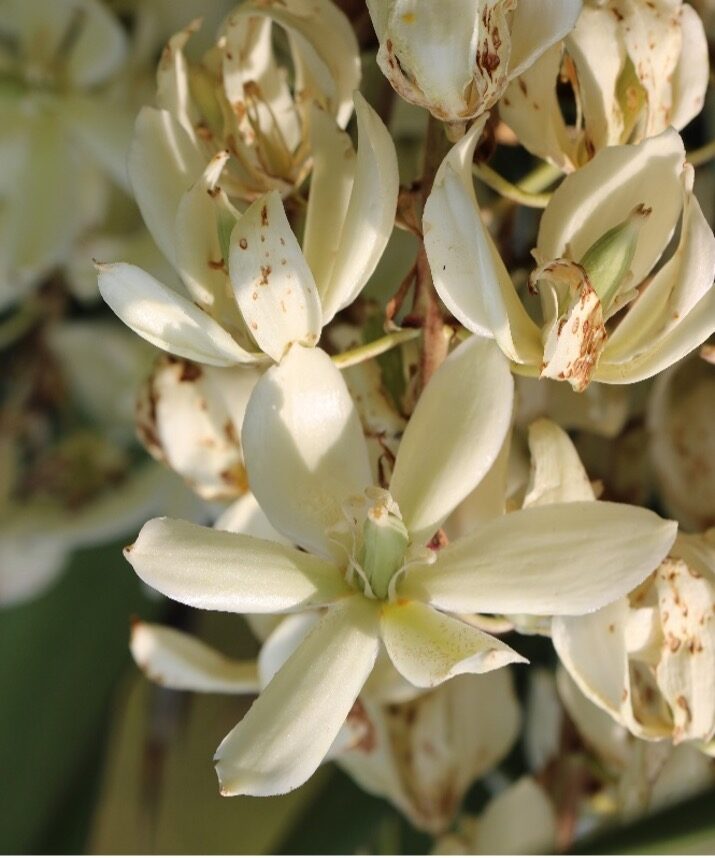
Blades, Blooms, and Butterflies: Spanish Dagger, Yucca treculeana

A striking large native yucca, the Spanish Dagger provides interest and beauty to any landscape. A large spike of creamy white flowers emerges in spring from an evergreen cluster of sharply pointed green leaves. The blooms are visited by butterflies and moths, and it is a larval host for multiple species of Giant Skipper. Interestingly, the first iNaturalist observations in Bexar County of the Yucca Giant Skipper were made at the River Authority’s Trueheart Ranch Nature Park in December 2024 through March 2025 along the Yucca Trail which includes this and other species of native yucca.
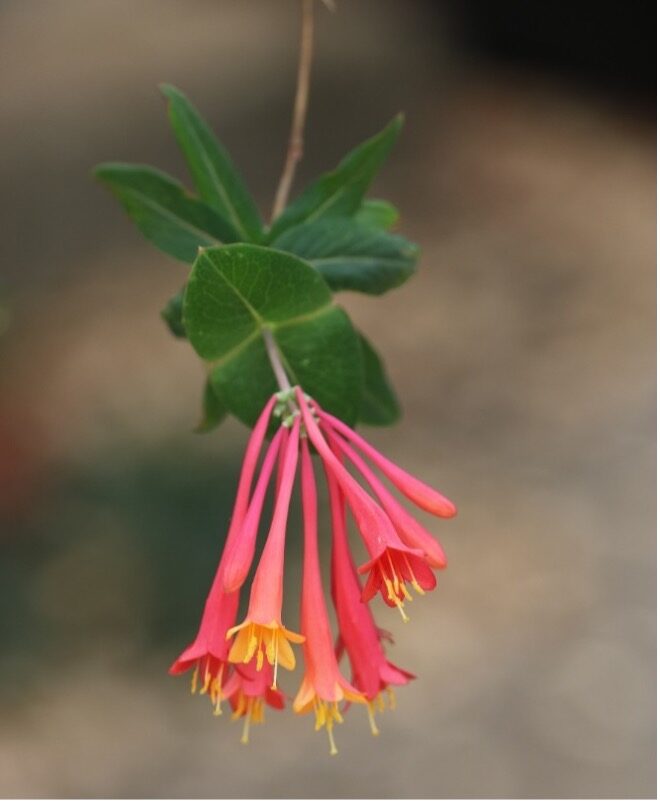
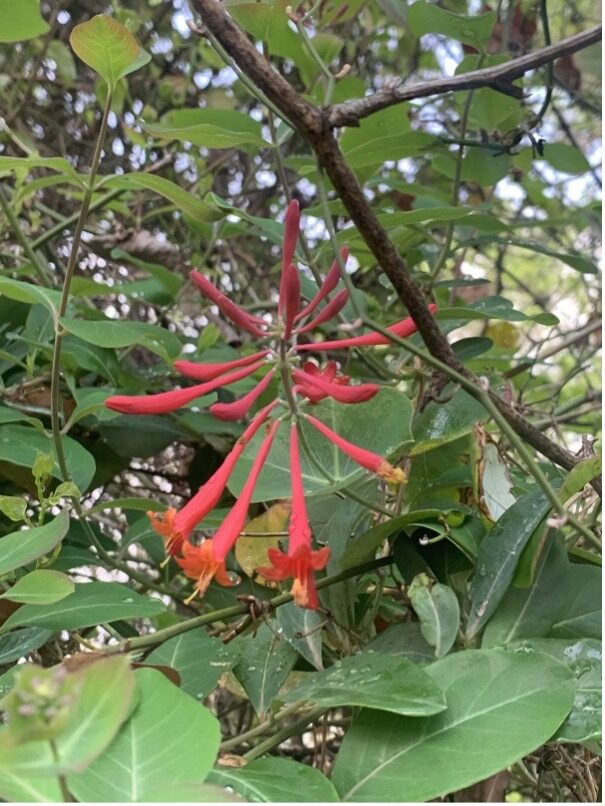
Hummingbird Magnet: Coral Honeysuckle, Lonicera sempervirens

Vibrant red flower clusters appear on this native twining vine from spring through summer attracting hummingbirds like a magnet. The attractive flowers are followed by ornamental shiny red fruits that are loved by birds. This native vine can grow up to 20 feet long and does well on arbors, trellises, or other support structures. It is not as aggressive as other vines and can also serve as a ground cover. In addition to hummingbirds, it attracts butterflies and bumble bees. It is a larval host for the Snowberry Clearwing Moth.
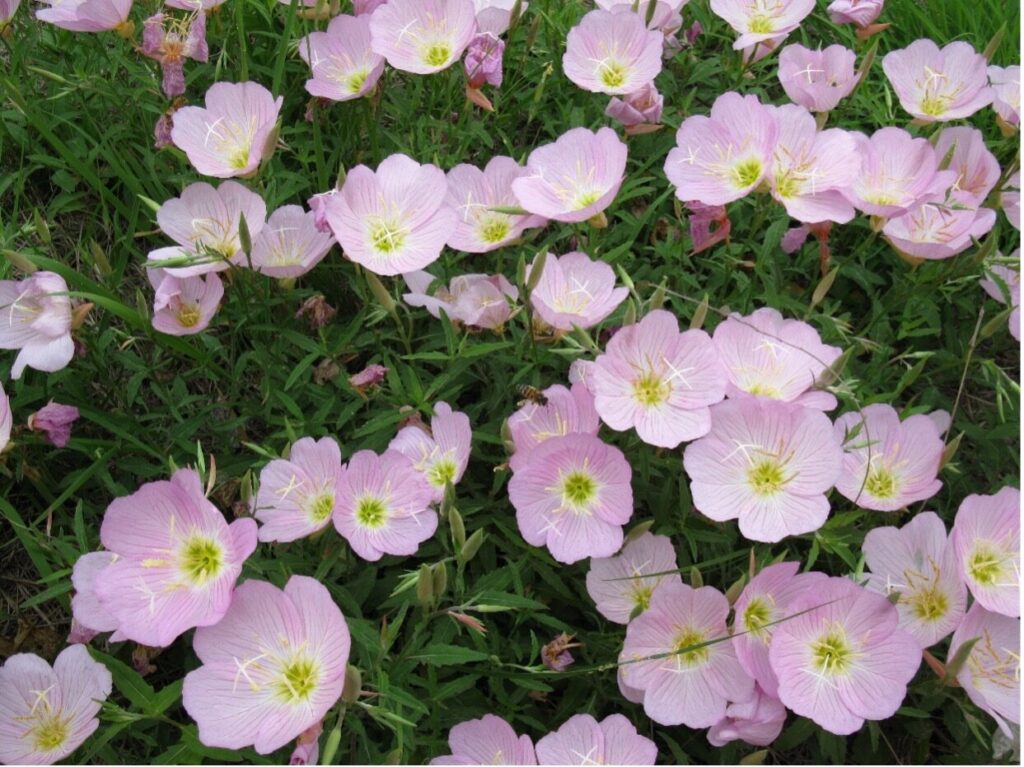
Pink Evening Primrose

Pink Petal Club: Pink Evening Primrose, Oenothera speciosa

This eye-catching native wildflower covers the earth with a beautiful pink blanket in spring. Reaching up to 2 feet in height, this perennial plant forms large patches making it a good choice for natural landscapes and wildflower gardens. It flowers from February through July and attracts bees and other pollinators. Finches and other birds feed on the seed capsules.

From the sweet scent of the Anacua to the vibrant blooms of Coral Honeysuckle, these native plants not only brighten our gardens but also support local pollinators, birds, and wildlife. Whether you’re creating your own wildflower patch or enhancing your yard with native trees and shrubs, incorporating these stunning plants is a great way to make your space more sustainable, colorful, and pollinator-friendly. So, get out there, roll up your sleeves, and let South Texas’s spring show inspire your own backyard oasis!

Native Plant Nurseries and Resource List
Related Articles

Alerts

Stay Weather‑Aware This Weekend

Stay Weather‑Aware This Weekend

Rain is expected across the region this weekend, which may result in high water on roads and temporary closures at low water crossings.

Before heading out, residents are encouraged to check SARiverFlood.org or their local county flood website for real‑time roadway conditions:

These sites provide up‑to‑date information from flood‑monitoring sensors across the region. Real‑time updates are available 24/7 to help you stay informed as conditions change.

Please use caution when traveling and plan routes accordingly.

Restroom Closure Notice – Camino Coahuilteca (Acequia Park Trail)


Restroom Closure Notice – Camino Coahuilteca (Acequia Park Trail)

The restrooms at Camino Coahuilteca along the Acequia Park Trail will be temporarily closed on Thursday, April 16 due to parking lot improvements in the area.

We encourage visitors to plan accordingly and utilize nearby facilities during this time.

We appreciate your patience as we complete this work to enhance the park experience.


Museum Reach – Oxbow Trail Closure Notice

The Oxbow Trail along the Museum Reach will be temporarily closed beginning Monday, April 13 through May 1 to accommodate project-related work in the area.

For public safety, access to this section of the trail will be restricted during this time. Visitors are encouraged to plan accordingly and use alternate routes.

Wayfinding signage and trail closure notices will be posted at designated locations to help guide trail users around the closure.

We appreciate your patience and understanding as we complete this work to help maintain safe and enjoyable trail conditions.

San Pedro Creek Culture Park

The east bank trail along San Pedro Creek will be temporarily closed between the upper trail at Cameron St. and the lower trail at two access points.

Closure details:

  • The first closure will impact the connector from the upper trail near West Houston St. to the south lower San Pedro Creek trail.
  • Once work at this location is complete and the trail reopens, construction will shift to the second closure area between the upper and lower trails on the opposite side of the green space.

Please follow posted signage and plan alternate routes. We appreciate your patience as this work is completed.

Closed areas around San Pedro Creek Culture Park

The Brackenridge Trail

Trail Lighting Notice – Brackenridge Park Trail

Due to an electrical issue, lighting is currently out along the north portion of the trail, from the Josephine Street inlet to just past Highway 281 within the Brackenridge Park Trail. Our team is actively working to correct the issue and expects repairs to be completed by the end of business tomorrow.

We apologize for any inconvenience this may cause and appreciate your patience as we work to restore lighting. Please use caution when traveling through this area, especially during evening hours.

Trail Closure Alert – Calder Alley, San Pedro Creek

Maintenance work will be done in Calder Alley starting Wednesday, September 18, 2025.

  • Trails will remain open during this work.
  • One bench at a time will be temporarily barricaded while improvements are completed.
  • There may be occasional contractor pickups in the area.

We appreciate your patience as we continue to maintain and improve San Pedro Creek for all to enjoy!

SASPAMCO Paddling Trail

The SASPAMCO paddling trail is open from River Crossing Park to Helton Nature Park.
*Please Note: Paddling Trail from Helton Nature Park to HWY 97 is still closed due to blockages. 

SASPAMCO Paddling Trail Temporarily Closed

Staff have removed two large log jams just downstream of Helton Nature Park, keeping the southern portion of the SASPAMCO Paddling Trail temporarily closed. Staff are working to contact adjacent landowners to support a land-based removal solution.

Goliad Paddling Trail Alert

NOTICE: HWY 59 Landing Site Closed

Due to TxDOT construction on the HWY 59 Bridge, the HWY 59 landing site is closed until further notice. However, the Goliad Paddling Trail remains open, and paddlers can still access the river at the Riverdale, Ferry Street, and Goliad State Park landings.

Please plan accordingly and check back for updates.

River Reach Newsletter and Blog Signup

River Reach is offered as a printed, physical mailing to your residence or business. The Blog is a weekly electronic email with news and updates in order to be more environmentally conscious. Please fill out the form below and indicate your preferred method of delivery.

By submitting this form, you are consenting to receive marketing materials from: San Antonio River Authority, 100 East Guenther St., San Antonio, TX, 78204, US. You can revoke your consent to receive emails at any time by using the SafeUnsubscribe® link, found at the bottom of every email. Emails are serviced by Constant Contact. This site is protected by reCAPTCHA and the Google Privacy Policy and Terms of Service apply.