
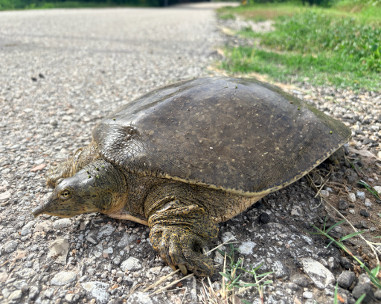
You might be surprised to hear that this is the description of a turtle! This is the Guadalupe Spiny Softshell (Apalone spinifera guadalupensis), one of four subspecies of Apalone spinifera in Texas. These turtles live along the San Antonio, Guadalupe, and Nueces rivers, crossing between them from their intersection near the San Antonio Bay and then making their way upstream (Check out this map of their range!). In this blog, we will learn more about Softshell turtles, what makes them unique, and how the Guadalupe Spiny Softshell fits into the San Antonio River ecosystem!
What are Softshell Turtles?
Softshell turtles set themselves apart from other aquatic turtle species in several notable ways. The first is the most obvious: their “soft” shell. Most turtle species have shells formed from a combination of cartilage and bone, covered in hard plates called scutes. These scutes are made of keratin, the same material that forms hair, scales, feathers, and claws in other species.

Softshell turtles lack these scutes. Instead, they have smooth, leathery skin covering their backs. Besides a significant reduction in weight, this soft shell provides them far more flexibility. This, combined with their specialized webbed feet and streamlined body, makes them adept swimmers. Using their speed to chase down prey or escape predators, these turtles cruise right along! Softshell turtles also make use of their extendable necks and snorkel-like nostrils to remain submerged and hide from predators for long periods of time.
How to Spot Guadalupe Softshell Turtles
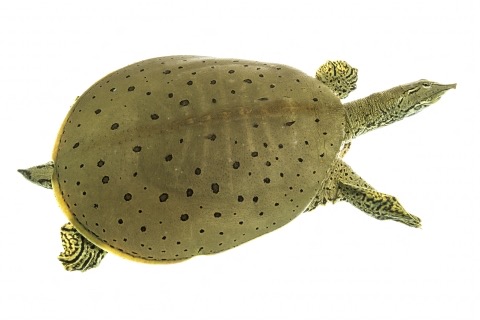
The Guadalupe Spiny Softshell turtle possesses some signature features that make it stand out from the other species of softshells. One of these features is in their name: spines! The shells of Spiny Softshell turtles are lined with pointy protrusions along the anterior (front end), called tubercles. They are made of the same keratin material that other turtle species have in their scutes. In most Spiny Softshell species, these tubercules are conical and pointy. But in the Guadalupe Spiny Softshell turtle’s case, its tubercles are round, flat, and smooth. Another feature they possess is a set of white spots covering their entire shell, and on adult males, you will find black rings surrounding each spot. This is an example of sexual dimorphism, different physical features that distinguish between males and females of the same species.
Our River’s Living Water Quality Indicators
Guadalupe Spiny Softshell turtles are indicators of good water quality. If you see them in your local river, it means the ecosystem is healthy enough to support them. Their entire life cycle relies on aquatic health and stable ground to live, grow, and reproduce. Let’s explain, starting with their nesting habits!
Starting in late spring and lasting throughout summer, female softshells will make their nests on land close to the water. This means that they are often built along the river in the soft, damp soil, incubating for roughly 2-3 months. This means that disturbances to the nest and along the riverbank can lead to the entire clutch being destroyed. Natural disturbances such as flash flooding can submerge nests, cutting off the air supply to the embryos inside their eggs.
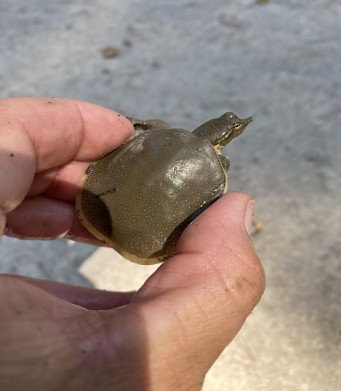
Photo Credit: Franz Schmidt on iNaturalist
Flash flooding also affects the turtles indirectly through stormwater pollution. Guadalupe softshell turtles primarily feed on fish, insects, and small invertebrates. These prey species are sensitive to changes in water quality. When it rains, pollutants run off into the river and can cause eutrophication, an increase in plant nutrients contained in the water. This can lead to algae blooms, resulting in a depletion of available oxygen in the water for plants and aquatic animals. As you can imagine, this can impact food sources and habitat quality for the Guadalupe Spiny Softshell.
How You Can Help Texas Turtles
So, what can you do to help the softshell turtles? Here are some ways you can safeguard the habitat of our not-so-hard–shelled friends and all the animals that call the San Antonio River Basin home:
- Pack it in, pack it out. We encourage all anglers fishing on the river to dispose of any trash in the proper trash cans or take it back home with you to throw it out. There are PVC pipes set up along the river specifically for fishing lines, which can entrap and injure animals.
- Reduce Plastic Waste. Replace single-use items with reusable ones! For example, reusable cloth grocery bags, metal water bottles, and bamboo utensils. Plastics can end up as litter on land and wash into storm drains and directly into the river, harming wildlife that relies on the river.
- Properly Dispose of Hazardous Waste. Dispose of household chemicals properly at designated drop-off locations. For example, the City of San Antonio’s collection locations are open year-round, and the River Authority hosts spring and fall collection events in Wilson, Karnes, and Goliad counties!
- Join the River Warriors! The River Warriors are a volunteer group run by the San Antonio River Authority that focuses on cleaning trash and pollution from our rivers. If you would like to help Softshell turtles in a river near you, then help us keep our rivers safe, clean, and enjoyable for everyone!
Author: Jackson Bearbower, Education and Engagement Intern
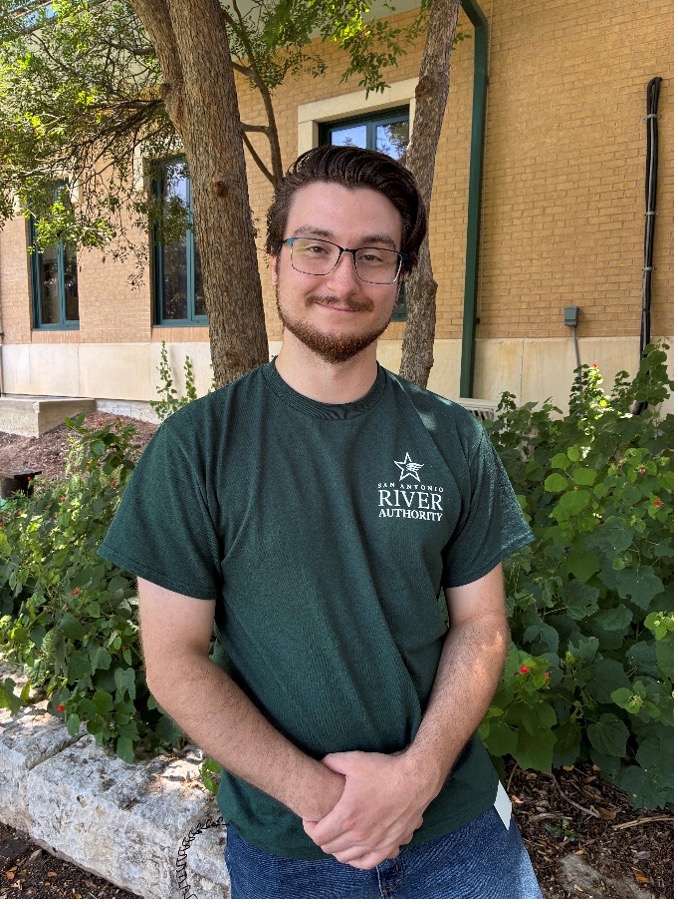
While pursuing a degree in Environmental Science, Jackson Bearbower was inspired by the San Antonio River Authority’s message and became a River Warrior volunteer. He furthered his experience by becoming a River Warrior Docent and he recently became the River Authority’s Education and Engagement Intern. As a member of the Public Affairs team, Jackson is excited to spread awareness about keeping our rivers safe, clean, and enjoyable. He also hopes to inspire the same passion that led him to the River Authority and help create a new generation of River Warriors.