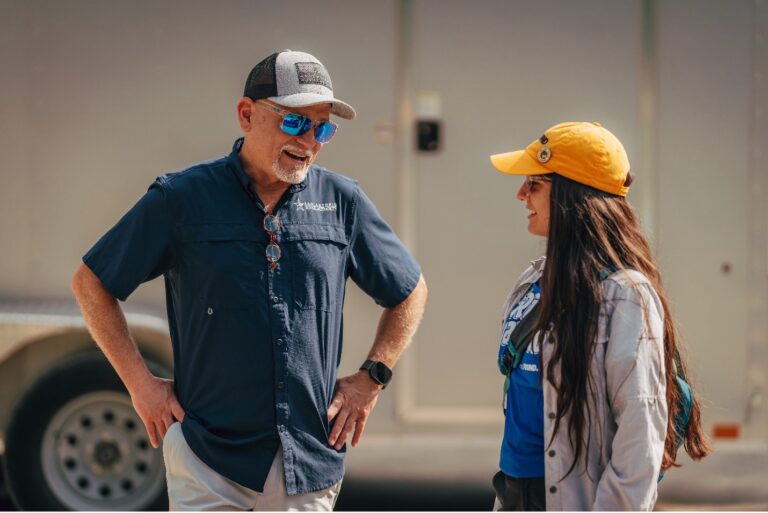


¡Hola! ¡Es un placer conocerte! Mi nombre es Ollie y soy uno de los empleados de la Autoridad del Río San Antonio. Mejores amigas de Basin¡Trabajo junto con mis amigos Heronimo, la gran garza azul, y Rex, el mapache común, para hacer de la cuenca del río San Antonio un lugar divertido para jugar y explorar. Soy un experto en todo lo recreativo: senderismo, pesca, kayak, natación, eventos comunitarios, lo que sea. Pero hay una cosa más en la que soy un experto, y es la Nutria de río norteamericana (Lontra canadensis). ¡Después de todo, yo soy uno!
Acompáñame mientras exploramos el papel crucial que desempeña la nutria de río norteamericana en los ríos de Texas, cómo detectar a nuestro doble invasor y qué puedes hacer para ayudar.
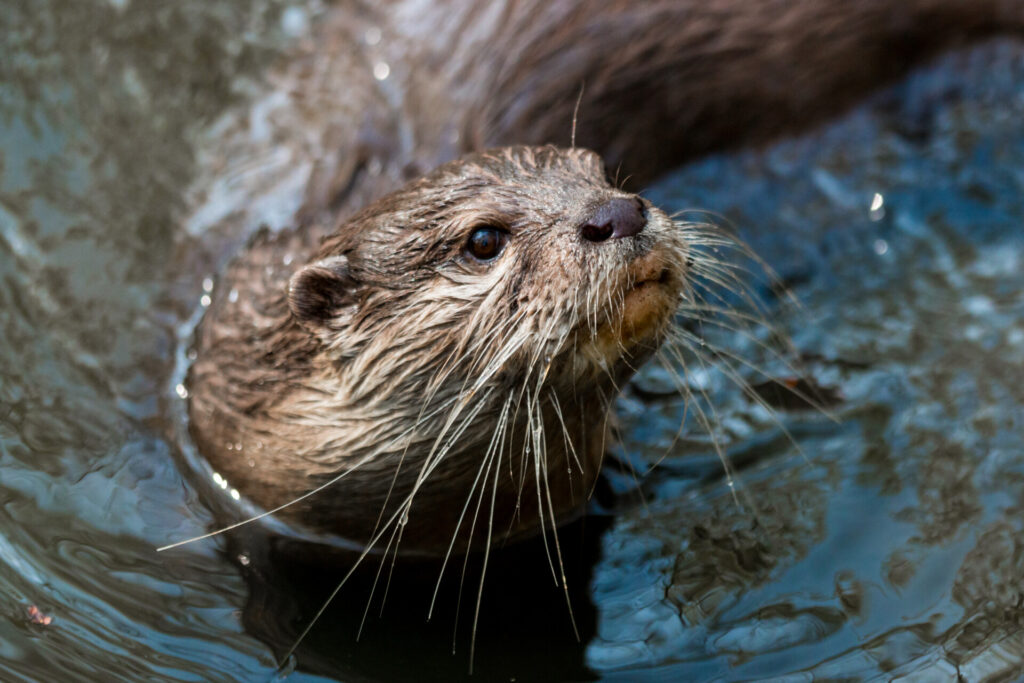
tsu natal del sur de Texas es un mamífero elegante y juguetón que se encuentra en todas las vías fluviales de América del Norte, desde Alaska hasta el Golfo de México. Con su cuerpo aerodinámico, pelaje denso y cola musculosa, la nutria de río es bien adaptado para nadar, utilizando es pies palmeados para perseguir pecesh, cangrejos de río y ranas. Conocidas por su naturaleza social y curiosa, las nutrias de río a menudo participan en juegos. comportamientos, como deslizarse por orillas fangosas. De acuerdo a mamífero biólogos, nutrias desempeñar un papel crucial en su ecosistemas como un indicador especies, a especies cuya presencia, ausencia, o la abundancia en un entorno sirve como señal de la salud o el estado general de ese ecosistema. También son un especies clave, controlar las poblaciones de presas y mejorar la biodiversidad. En otras palabras, las poblaciones saludables de nutrias son una gran señal de que un ecosistema es prosperando, que es exactamente por lo que nosotros nutria ¡Me preocupo por ellos!
¿Dónde se pueden encontrar en Texas?
Las nutrias de río, conocidas por su comportamiento juguetón y agilidad en el agua, son una vista común en los lagos y arroyos del este de Texas. Sin embargo, su distribución histórica en Texas era mucho más extensa. Estos mamíferos semiacuáticos alguna vez habitaron áreas que se extendían desde el este del Panhandle, a través de la meseta central de Edwards, y hasta el valle del Río Grande en el sur de Texas, incluyendo el Cuenca del río San Antonio.
Según Craig Hensley, biólogo del Departamento de Parques y Vida Silvestre de Texas (TPWD), históricamente se encontraban nutrias de río en el condado de Bexar, hasta la zona de Goliad. La caza y la captura intensivas durante los inicios del comercio de pieles en Estados Unidos, así como la contaminación del agua y la pérdida de hábitat, provocaron una disminución de las poblaciones de nutrias a finales del siglo XIX.th y principios de los 20th siglos, erradicándolos por completo de ciertas áreas. Sin embargo, debido a la reducción de la caza, la mejora de la calidad del agua y la restauración del hábitat, se han documentado nutrias de río. expandiéndose hacia el oeste a sus hábitats nativos hasta el área de Abilene. Debido a esta expansión, fueron eliminados de la lista de TPWD. Especies de mayor necesidad de conservación lista en 2021.
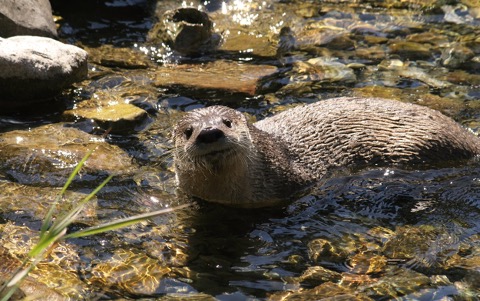
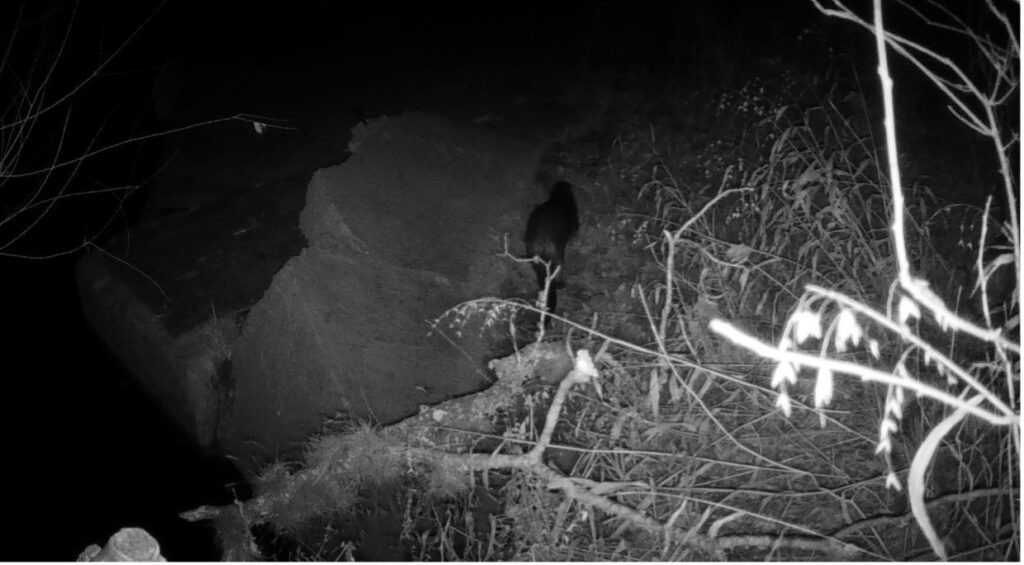
En un emocionante capítulo en la historia de la conservación de la nutria de río, la Universidad Estatal de Texas anunció en la primavera de 2024 que Se habían registrado cuatro avistamientos de la nutria de río en el río San Marcos.. Esta era la primera vez en 70 años que se documentaba su presencia en esa zona. Es posible que las nutrias también estén regresando a la cuenca del río San Antonio. En 2024, una nutria de río fue visto en el río San Antonio en Goliad Por Jared Ramirez, superintendente del Parque Estatal Goliad. En 2025, el personal de la Autoridad del Río captó una nutria con una cámara de vigilancia en el condado de Bexar, ¡y el verano pasado las avistaron en Cibolo Creek!
Mira la imagen de abajo: ¿puedes encontrar la nutria?
“Animo a la gente a que esté atenta a su presencia en el área de San Antonio durante los próximos años y que reporte los avistamientos a iNaturalist”, dijo Hensley. Sin embargo, avistar uno es difícil debido a su naturaleza esquiva y tímida. ¿Dónde se han producido los avistamientos más recientes en nuestra área? Consulte el sitio web de iNaturalist para obtener más información. información sobre avistamientos recientes de nutrias de río en Texas.
Nutria: un invasor parecido a la nutria
Mientras vigilas a las nutrias de río, es importante saber más sobre una especie invasora con la que a menudo se las puede confundir.la nutria (coipus miocastor). La nutria, también conocida como la coipu En algunos países, la nutria es un roedor invasor originario de Sudamérica. Según Tommy Mitchell, gerente de operaciones de cuencas hidrográficas y parques de la Autoridad del Río, se han encontrado nutrias en las zonas de Mission Reach, Eagleland y King William del río. “La principal preocupación con la nutria es el impacto que tiene en la vegetación acuática y la ribera del río debido a sus madrigueras, lo que provoca la erosión del cauce. Contamos con un programa para la captura y eliminación de nutrias similar al programa para cerdos salvajes. La cantidad de nutrias observadas parece haber disminuido con los años, esperamos que gracias al programa de eliminación”.”
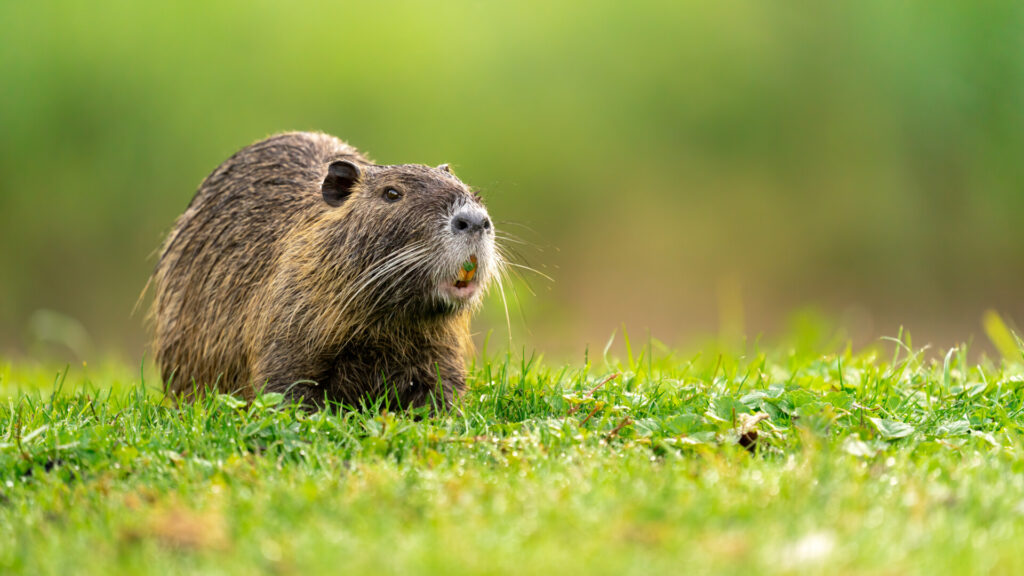
Introducidas originalmente en Estados Unidos a partir de 1899 para su cría y explotación en el comercio de pieles, muchos criadores de nutrias las liberaron en la década de 1940, cuando este comercio entró en declive, y otras simplemente escaparon del cautiverio. Debido a su alta tasa de reproducción en libertad, las nutrias se multiplicaron rápidamente en los estados del Golfo y a lo largo de la costa oeste. A veces se las confunde con nutrias de río; sin embargo, pertenecen a órdenes taxonómicos diferentes. Las nutrias, pertenecientes al orden Carnivora, están emparentadas con los tejones, los visones, las comadrejas y los glotones, todos ellos miembros de la familia Mustelidae. Las nutrias son roedores y están estrechamente relacionadas con los castores y las ratas almizcleras. Se pueden encontrar nutrias en todo Texas, incluido el río San Antonio.
Cómo puedes ayudar a las nutrias de río
¿Te imaginas ver nutrias de río en la parte alta del río San Antonio en el futuro? Aquí te presentamos algunas medidas para asegurarnos de que nuestros ríos y hábitats acuáticos locales sigan siendo amigables con las nutrias.
- ¡Dejemos la vida silvestre en su estado salvaje! Si bien puede ser emocionante ver una nutria en su hábitat natural, es importante recordar que debemos mantener a la fauna silvestre en su estado salvaje. Nunca te acerques, alimentes ni toques a los animales salvajes; ¡así estarás a salvo tanto tú como el animal!
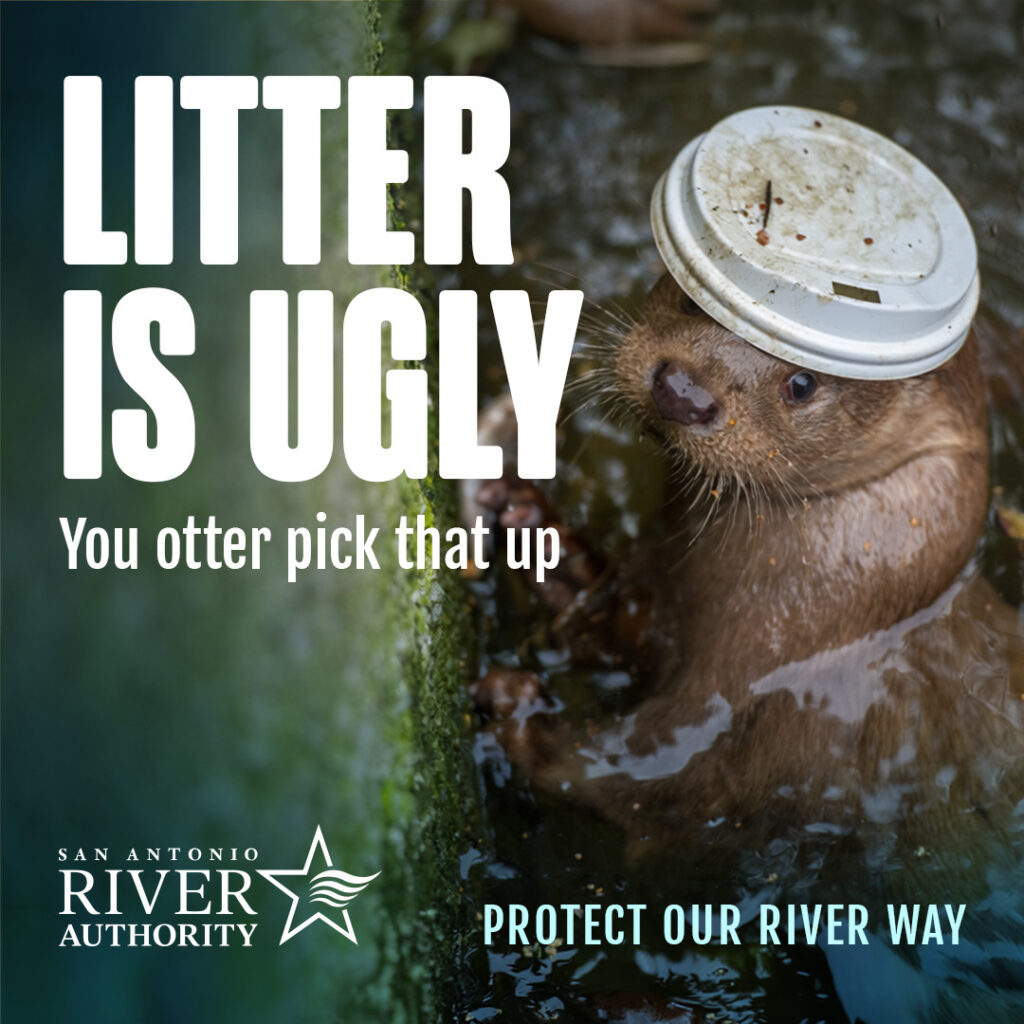
- No dejes que la basura ensucie tu río. Las nutrias se alimentan de peces, por lo que es importante garantizar que los peces vivan en cursos de agua libres de productos químicos nocivos y metales pesados para evitar que la especie sufra envenenamiento por mercurio.
- Ponle la correa a tu perro. Las nutrias prefieren dormir entre arbustos y hierbas altas cerca de cursos de agua, así que asegúrate de llevar a tu perro con correa para que no ataque ni moleste a una nutria que esté durmiendo.
- Utilice los puntos de acceso al río ya existentes. Esto ayuda a preservar el hábitat de las nutrias del impacto humano y a prevenir la erosión.
¡Muchísimas gracias por dedicar tiempo a aprender sobre las nutrias de la cuenca del río San Antonio! Espero que hayas aprendido algo útil con este blog y que uses ese conocimiento para hacer de nuestros ríos un hábitat más seguro y limpio para todos los animales que los habitan.
Permanecer nutria ¡asombroso!
Atentamente, Ollie

Autor: Emily Rew, Educación Coordinador

Emily Rew es coordinadora de educación en la Autoridad del Río San Antonio, donde se dedica a conectar a las personas con la ciencia, la gestión y las historias del río San Antonio. Como editora jefa del blog de la Autoridad, colabora con científicos, ingenieros y agencias asociadas para dar a conocer la fascinante vida silvestre, los proyectos y las iniciativas de conservación de la cuenca. Cuando no está escribiendo ni desarrollando programas educativos, se la puede encontrar explorando los ríos y arroyos de Texas en kayak, bicicleta o senderos con su esposo y su perra, Ember.
Gracias a los expertos de Parques de Texas&Rastreadores de la naturaleza y la vida silvestre de Texas ¡Gracias por su ayuda con esta función!