
Última actualización: 30 de julio de 2026
¡Hola a todos!

Mi nombre es Rex, y soy uno de los Mejores amigas de Basin¡Mi trabajo es mantener la cuenca del río San Antonio limpia y bonita! Ahora, lo admito, tengo fama de ser un desastre adorable; ¡no puedo resistirme a un buen montón de basura! Pero eso es precisamente lo que me hace tan buena en mi trabajo. Me encanta recoger basura, recolectarla y convertirla en algo nuevo (¡miren mi sombrero hecho con vasos de poliestireno reciclados y mi pajarita con pajitas!). Cuanto más busco por el río y los alrededores, más veo cómo la basura en tierra puede terminar en el agua, así que me he propuesto recordarles a todos dónde va la basura. en realidad pertenece.
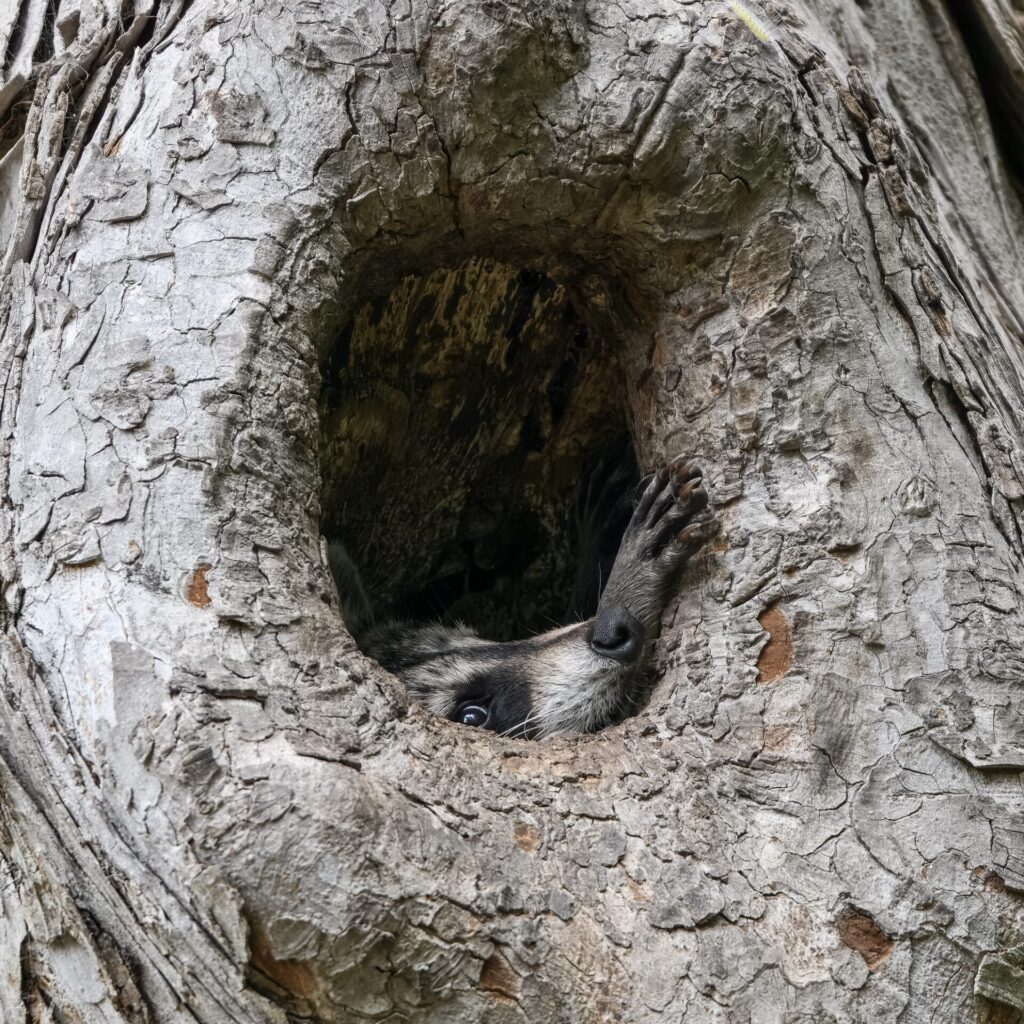
Hablando de carroñear, esa es solo una de las muchas cosas que me hacen ser... ¡un mapache! Hoy quiero enseñarles todo sobre mi familia extendida. Nos pueden encontrar por todo Texas; desde los bosques del este hasta las costas del sur e incluso en su propio patio trasero. Aunque puede que les cueste encontrarnos, ya que todos estamos... nocturno, lo que significa que nos gusta salir de fiesta por la noche. Pero no te preocupes, estoy aquí para darte información privilegiada sobre los mapaches para que tú también puedas aprender cómo es vivir como un mapache.
Los mapaches se pueden encontrar no solo en Texas, sino en toda Norteamérica. Nos puedes reconocer por nuestras colas tupidas y anilladas, nuestras manos de cinco dedos y, por supuesto, nuestra clásica máscara facial negra. Nuestra dieta incluye frutas, nueces, pescado y ¡cualquier cosa que los humanos dejen en la basura! Esto nos hace... omnívoros Porque comemos tanto plantas como carne. ¡Somos más parecidos a los humanos de lo que crees!
Aquí en Texas, cada mapache que veas será un Mapache común (o un Lotor Procyon, (si quieres ser elegante). Puede que no supieras que hay tres subespecie Somos mapaches comunes, lo que significa que tenemos rasgos físicos diferentes, pero seguimos siendo la misma especie. Piensen en nosotros como primos en una gran familia extendida. ¡Además, todos hemos aparecido en la cuenca del río San Antonio! Se necesita un ojo avizor para detectar las diferencias entre nosotros, así que vamos a analizarlas.
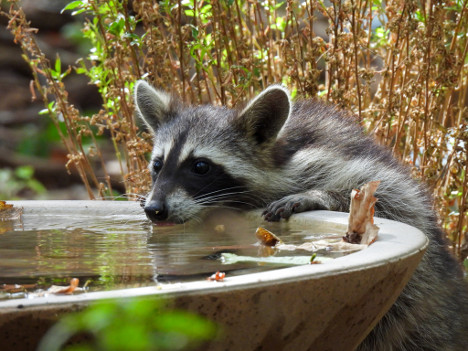
El Mapache común es el mapache más extendido en Texas. Cuando te imaginas un mapache, ¡probablemente seamos nosotros! Los mapaches comunes pueden crecer hasta 60 cm de largo y pesar entre 4,5 y 14 kg. Nos encontramos con mayor frecuencia en el este de Texas, en zonas boscosas y a lo largo de las riberas de los ríos. ¡También nos hemos adaptado a la vida en las grandes ciudades! Es posible que nos encuentres abriendo botes de basura en busca de un bocadillo nocturno o trepando a una farola para atrapar insectos. Podemos hacer esto gracias a nuestra patas delanteras altamente adaptadas, que poseen la destreza para manipular objetos con gran precisión. ¡Incluso tenemos cinco dedos en cada mano, igual que las personas!
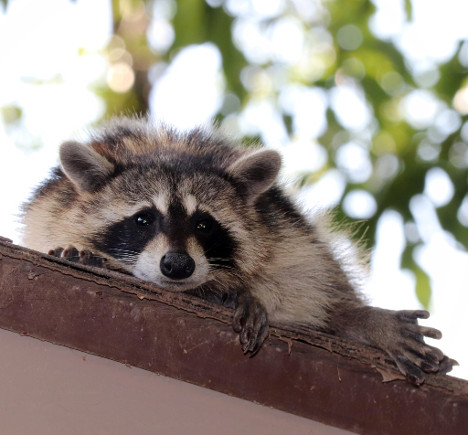
El Mapache de Texas (P. l. fuscipes, (también llamado mapache del norte) es nativo del centro y sur de Texas. Comparados con los mapaches comunes, parecen más delgados y ligeramente más pequeños. Son más reconocibles por su máscara facial más oscura y su pelaje de color gris rojizo. Mis primos del campo prefieren vivir en la naturaleza, haciendo su hogar en árboles huecos o madrigueras abandonadas. Debido al clima más cálido en el que viven, los mapaches de Texas no desarrollan un pelaje de invierno. En cambio, Mantienen su pelaje más claro durante todo el año.. ¡Menuda aventura!
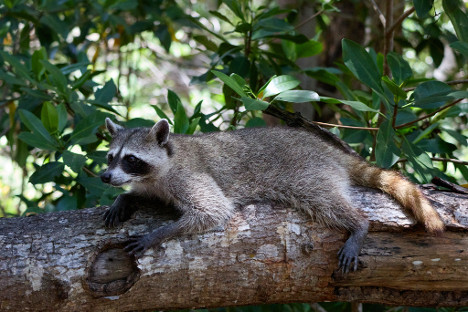
Por último, pero no por ello menos importante, el Mapache mexicano (P. l. hernandezii)¡Si los mapaches comunes son niños de ciudad y los mapaches de Texas son vaqueros, entonces los mapaches mexicanos son los pescadores! Conocidos en español como los Mapache, esta es la subespecie de mapache más rara en Texas. Se les ve con mayor frecuencia a lo largo de la frontera sur, les gusta vivir en manglares. Se trata de humedales a lo largo de la costa del Golfo, repletos de árboles y arbustos adaptados al agua salada. Su dieta se compone principalmente de peces, ranas y mariscos. Debido al tiempo que pasan en el agua, sus cuerpos se han adaptado para ser más pequeños, delgados y tener pelaje más corto, lo que facilita la natación.
¡Sé tú también una mejor amiga de Basin!
¡Espero que hayan aprendido algo sobre los mapaches! Si ven uno en su vecindario, ¡solo tienen que saludarlo! No hace falta que nos den de comer, ya que nos las arreglamos solos para encontrar comida. Si quieren ayudar a un mapache cerca de ustedes, ¡contribuyan a reducir la basura! Aunque nos llamen "pandas de la basura", no es un buen alimento. Si ven basura en la naturaleza, asegúrense de tirarla donde corresponde: en el bote de basura con la tapa cerrada. Esto no solo nos ayuda a nosotros, sino que también mantiene limpia la cuenca del río San Antonio para todos, ¡incluidos ustedes!
Haz clic aquí si quieres saber más sobre Apoyando la vida silvestre local!
¡Gracias a todos por acompañarme! ¡Espero que disfruten de su tiempo en el río! ¡Nos vemos allí!!
Autor: Jackson Bearbower, Pasante de Educación y Participación

Mientras cursaba la licenciatura en Ciencias Ambientales, Jackson Bearbower se sintió inspirado por el mensaje de la Autoridad del Río San Antonio y se convirtió en voluntario de River Warrior. Amplió su experiencia al convertirse en guía de River Warrior y recientemente comenzó a trabajar como pasante en el departamento de Educación y Participación de la Autoridad del Río. Como miembro del equipo de Asuntos Públicos, Jackson está entusiasmado por crear conciencia sobre la importancia de mantener nuestros ríos limpios, seguros y agradables. También espera inspirar la misma pasión que lo llevó a la Autoridad del Río y ayudar a crear una nueva generación de River Warriors.
Fuentes
Chabannes, P. (8 de abril de 2016). Procyon lotor fuscipes. Vida silvestre de Pierre. https://www.pierrewildlife.com/searchspecies/mammals/carnivores/othercarn/procyonlotor/
Gale, J. (23 de octubre de 2025). ¿Cómo se llama el mapache mexicano? Iere.org; Instituto de Investigación y Educación Ambiental. https://iere.org/what-is-a-mexican-raccoon-called/
iNaturalist. (2025). iNaturalist.org. En iNaturalista.org. Naturalista. https://www.inaturalist.org/
Parques y Vida Silvestre de Texas. (2025). Mapache común (Procyon lotor). En tpwd.texas.gov. Parques y Vida Silvestre de Texas. https://tpwd.texas.gov/huntwild/wild/species/raccoon/